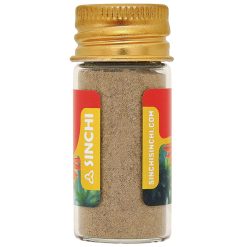
Aroeira
30,00€
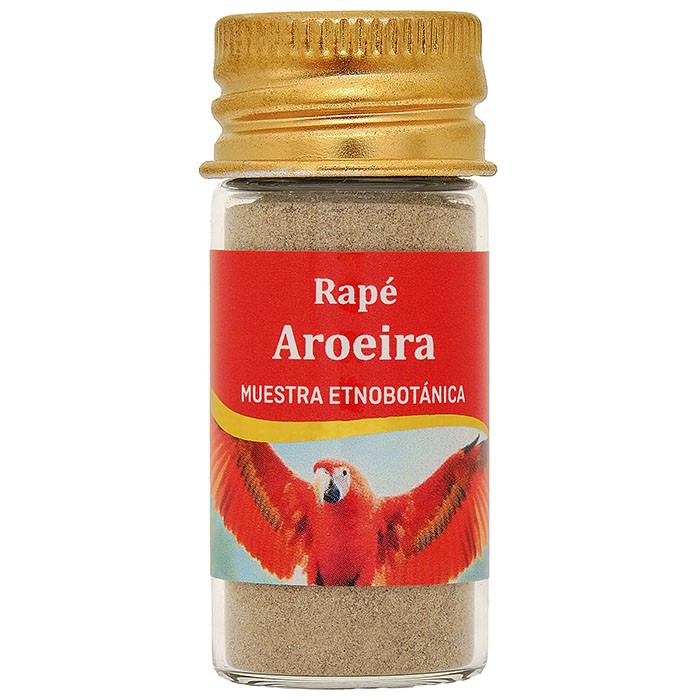
Rapé Aroeira is a variety characterized by its strong aroma; it is made from the Aroeira plant, also called pink peppercorn or aroeira-vermelha, and is traditionally used by Amazonian tribes for both its medicinal properties and in ceremonies.
In ceremonial contexts, Rapé Aroeira is traditionally used to facilitate spiritual connection, introspection, and mental clarity, working on the Third Eye and Throat chakras. Rapé Aroeira is also known by other names, such as “Dume Deshke” by the Huni Kuin, or “Rome Poto” by the Katukina.
For its preparation, the leaves and stems of the plant are carefully harvested, dried, and ground.
Aroeira (Schinus terebinthifolius)
Aroeira, also called Brazilian peppertree, turbinto, Hawaiian peppertree, or pink peppercorn, is a shrub or small tree 7 to 10 m tall, native to subtropical and tropical areas of South America, specifically southeastern Brazil, northern Argentina, and Paraguay.
Revered for both its spiritual and medicinal properties, it is considered by Amazonian tribes to be a guardian of the rainforest and a source of ancestral wisdom.
It is characterized by having both ascending and drooping branches. Its leaves have oval leaflets with finely toothed margins. Its flowers are small and white, and the fruit is a very small (4 to 5 mm in diameter) red, spherical fruit that grows in dense clusters of hundreds.
Although not a pepper tree, its dried drupes (fruits) are sold as pink peppercorns. The seeds are used sparingly as a spice, adding black pepper, as they are toxic otherwise.
Like many other species in the Anacardiaceae family, the Brazilian peppertree has an aromatic latex that causes skin reactions in sensitive individuals.
It is also used as an ornamental plant and has become a weed in many subtropical regions; it is particularly colonizing and forms a dense canopy, smothering other plants. The sale, transport, or planting of the tree is prohibited in the U.S., and it is included on the International Union for Conservation of Nature’s list of the 100 most harmful invasive alien species.
The name “Schinus” is the Greek word for mastic tree, a tree in the same family; “terebinthifolius” is a Latin compound epithet meaning “with leaves of the genus Terebinthus” (referring to the modern genus Bursera).
Medicinal Properties of Aroeira
Aroeira is used in traditional medicine for its astringent, balsamic, diuretic, anti-inflammatory, antimicrobial, tonic, and healing properties.
Traditionally, Aroeira is used to promote physical, emotional, and spiritual well-being, as well as concentration and focus.
Among its medicinal properties, it reduces inflammation, making it very useful in the treatment of conditions such as arthritis and rheumatism.
In addition, it has diuretic properties, is used to relieve respiratory problems, and helps strengthen the immune system.
In South America, the Incas considered the plant a true panacea and attributed numerous virtues to it. The berries were used to treat urinary problems, improve venous circulation, and relieve joint pain. They used the leaves for oral care and the resin as a purgative.
The berries are used to make a fermented beverage similar to beer, called chicha.