🌿 The rapé of the Huni Kuin tribe

+
This product has multiple variants. The options may be chosen on the product page

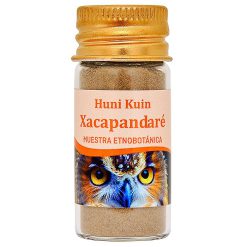
Huni Kuin

Xacapandaré

30,00
+
This product has multiple variants. The options may be chosen on the product page

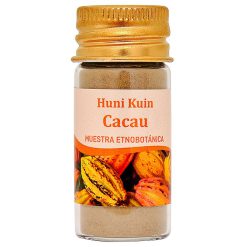
Huni Kuin

Cocoa

28,00
+
This product has multiple variants. The options may be chosen on the product page

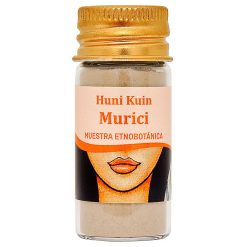
Huni Kuin

Huni Kuin Murici

25,00
+
This product has multiple variants. The options may be chosen on the product page

Huni Kuin

Cumaru

26,00

In the Huni Kuin tradition, the ashes that give each variety its character [kumã (cumaru), yapa (murici), mulateiro, tsunu] contain the spirit of the tree distilled into the finest rapé. Each tree brings its own particular yuxin: the enduring hardness of the cumaru, the renewal of the mulateiro, the cleansing acidity of the murici.

If nixi pae (Ayahuasca) is the medicine of water and Sananga the medicine of vision, rapé is the medicine of air: it clears the channels, clears the mind, reorders thought.

In daily life, the Huni Kuin use rapé to focus their mind, organize their thoughts, or gather energy before work. Rapé cleanses, opens the energy channels, drives away nisũ (laziness, dullness, confusion). The sacred mapacho (Nicotiana rustica) that composes it is cultivated in their roçados.

In the nixi pae ritual, it accompanies three stages: before, to center the participant; during, to keep them present when the vine carries them far; after, to bring them back to the body. “It opens each person’s connection to their own essence and, through it, to the divine,” the Huni Kuin themselves write about their rapé.

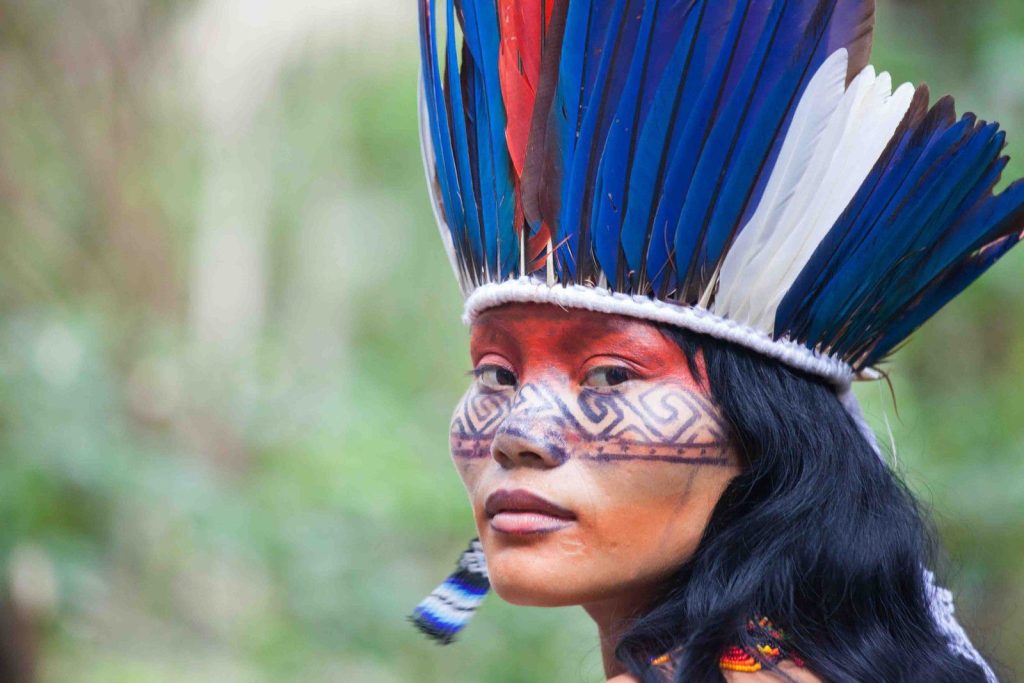
Retrato de perfil de una mujer Huni Kuin con tocado de plumas de guacamayo, diseños kene pintados con jenipapo alrededor de los ojos y pendiente de mostacillas azules

The Amazonian Huni Kuin tribe

The Huni Kuin (“true people” in their language, Hãtxa Kuĩ) are the most numerous indigenous people of the state of Acre. Around 14,000 people inhabit twelve Indigenous Territories distributed along seven rivers, in one of the most biodiverse stretches of forest in all of western Amazonia.

Their worldview is organized into two complementary halves: the Inubakebu (children of the jaguar) and the Duabakebu (children of the brightness). Everything that lives contains yuxin (vital force), and the master plants (nixi pae, rumê, sananga, kampũ) are the presences that teach, cleanse, and open paths of knowledge.

In 1951, an epidemic reduced the people to 450 individuals. Their reconstruction encompasses territory, language, ceremony, and an artistic movement (MAHKU) that has brought the Huni Kuin worldview to the Venice Biennale.

Huni Kuin People

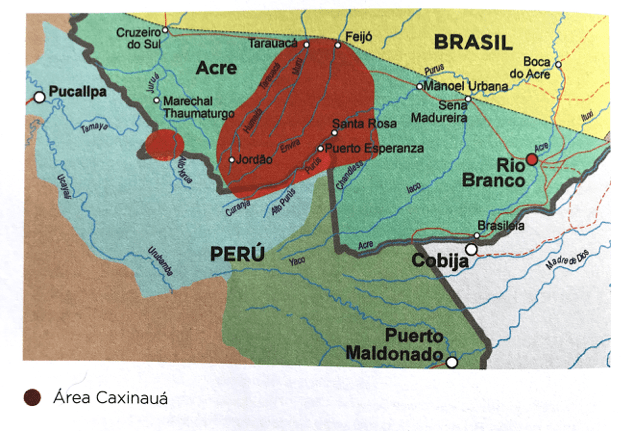
The Huni Kuin are the most numerous indigenous people of the state of Acre, in the western Brazilian Amazon. Their name means “true people” in their own language, Hãtxa Kuĩ. Approximately 14,000 people live distributed across twelve Indigenous Territories along the Jordão, Tarauacá, Breu, Muru, Envira, Humaitá, and Purus rivers, in a region of deep forest that extends to the border with Peru, where another 2,400 people of the same nation reside.

The Huni Kuin belong to the great Pano-speaking peoples of the Juruá and share territory, worldview, and kinship ties with them. At the same time, they maintain a distinct identity expressed in their social organization, their language, their art, and the way they name themselves.

Huni means “man” or “people,” and kuĩ means “true,” so Huni Kuin means “true people.” It is the name by which they recognize themselves as a nation.

Kaxinawá, on the other hand, is a name that came from outside: kaxi means “bat” and also “one who walks at night,” and nawa means “other people” or “foreigner.” It was a name constructed by neighboring peoples with a derogatory connotation, later adopted by missionaries, rubber tappers, and ethnographers until it became fixed in the academic literature.

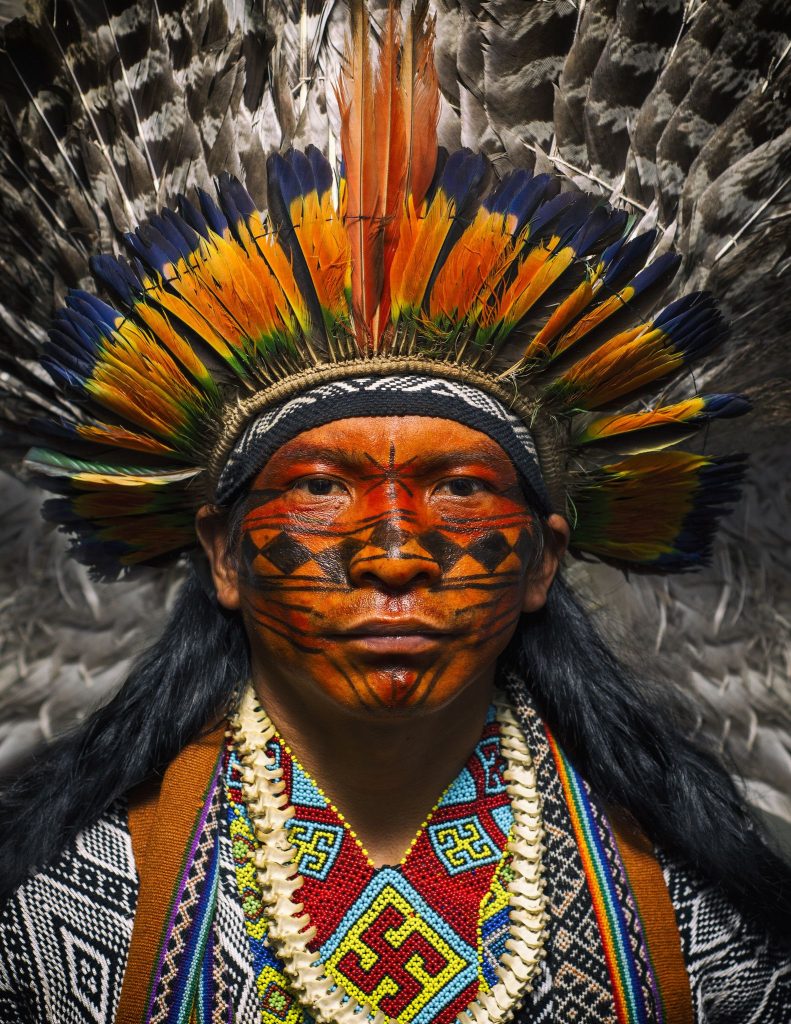
Retrato frontal de un hombre Huni Kuin con tocado ceremonial de plumas de guacamayo, pintura facial de urucú con diseños kene y pectoral de mostacillas con patrones geométricos tradicionales

The Hãtxa Kuĩ language

The language of the Huni Kuin people is called Hãtxa Kuĩ, meaning “our language” or “true language.” It belongs to the Pano family and shares roots with the languages of other peoples of the Juruá and the Purus.

The vitality of Hãtxa Kuĩ is greater than that of many indigenous languages in the region, but it faces real pressures: of the twelve Huni Kuin territories, six show weakening, as only the elders speak the language fluently while the younger generation hears and understands but prefers to express themselves in Portuguese.

Until the 1980s, Hãtxa Kuĩ was exclusively oral in Brazil. The work of Joaquim Mana (documenting the knowledge of the elders, creating the alphabet, training indigenous teachers) opened the way to a network of twelve bilingual intercultural schools, one in each Indigenous Territory, which today constitutes one of the most extensive networks of indigenous education in the country.

The Federal University of Acre also offers an indigenous degree program so that Huni Kuin teachers can teach their own language and culture with academic recognition.

A small detail reveals much about the worldview the language contains: in Hãtxa Kuĩ there is no word for “obrigado” — the Portuguese way of giving thanks, which literally means “obligated.” Instead, they say txakamaki, which means “very good.”

The Huni Kuin do not have a word to name humanity as an abstract category. Their thinking classifies human beings into four types:

kuin* (us, the true ones),

kuinman* (the not-us, other distant Huni Kuin),

bemakia* (the Others — white people, former enemies)

kayabi* (the non-Others — the nearby Pano peoples such as the Yaminawa, Sharanawa, or Mastanawa).

To say “all of humanity” they must resort to a descriptive formula: dasibi huni inun betsa betsapa*, “all of us and the others who are different.”


The two halves: Inubakebu and Duabakebu

The life of the Huni Kuin is organized into two halves that complement each other: the Inubakebu and the Duabakebu. This duality runs through all of existence (marriages, rituals, songs, ceremonies, worldview).

The Inubakebu, “children of the jaguar,” embody the solar pole linked to the Inka: that which is durable, firm, and permanent. The Duabakebu, “children of the brightness,” embody the lunar pole linked to Yube, the great anaconda: that which is fluid, fertile, and transformative. Their name alludes to the shifting radiance of the moon reflected on the water, the phosphorescence that Yube projects as it moves between worlds. An Inubakebu always marries a Duabakebu; names are transmitted from grandparents to grandchildren in alternating generations, creating a network that connects each person to their ancestors and to the half of the cosmos to which they belong.

The jaguar and the anaconda are the two poles that generate life in their encounter. Human existence is born from that tension: the fluidity of Yube and the permanence of the Inka, the water that moves and the fire that fixes form.

Huni Kuin Territory

The Huni Kuin inhabit a network of territories distributed along seven rivers of the western Amazon: Jordão, Tarauacá, Breu, Muru, Envira, Humaitá, and Purus. This distinguishes them from other tribes in the region, which tend to concentrate along a single river or in a single Indigenous Territory. Their world is organized by river basins, riverside villages, and forest trails connecting more than one hundred settlements in one of the deepest and most biodiverse stretches of forest in all of southwestern Amazonia.

The Huni Kuin territories are located in one of the most biodiverse regions on the planet. The forest surrounding their villages combines terra firme forest, where hundreds of species of medicinal plants grow, along with trees such as the ceiba, the cumaru, the copaíba, and the Brazil nut, with areas of seasonally flooded forest (várzea and igapó), as well as dense riparian vegetation fed by rivers, lakes, and streams.

Water is the backbone of life in these territories. The rivers guide movements, sustain fishing, feed crops, and connect villages to one another. Along the riverbanks, more than two hundred species of fish can be found, along with river turtles, caimans, and an enormous variety of aquatic life. In the terra firme forest dwell jaguars, tapirs, wild pigs (queixadas), monkeys, and canopy birds.

Mapa del territorio Huni Kuin (Caxinauá) en el estado de Acre, Brasil, y el este de Perú, con el área indígena marcada en rojo a lo largo de los ríos Envira, Jordão y Purus

The Envira River: the origin

Among all the rivers that run through Huni Kuin territory, the Envira holds a special place. In Hãtxa Kuĩ it is called Bariya (“river of the sun”). It is the original axis along which the people expanded before the history of rubber changed the paths of the forest.

From the Envira, the Huni Kuin began moving upriver until they concentrated in the basins they inhabit today. The Envira is, in the memory of the people, the starting point — the river from which the true people spread through the forest, following the water, seeking territory, and establishing the villages that over time would form the network in which they now live.

The earliest records of travelers in the Alto Juruá confirm this memory: they identify the Muru, Humaitá, and Iboiçu rivers — three tributaries of the Envira — as the territory the Huni Kuin inhabited before the arrival of the rubber tappers. From those headwaters, the people gradually extended toward the Jordão, the Tarauacá, and the Purus.

Today, Huni Kuin territory faces real pressures; illegal logging reaches the boundaries and, in some cases, the interior of Indigenous Territories. Ninawa Huni Kuin, a leader and defender of the people’s rights, has clearly denounced the threat that logging industries pose to the integrity of the territories.

Despite these threats, the Huni Kuin maintain a firm territorial presence. The self-demarcation of the TI Kaxinawá do Rio Jordão in 1985 (one of the first cases of indigenous self-demarcation in Brazil) set a precedent: the people traced the boundaries of their own territory before the State did so.

Huni Kuin History

When the first Europeans arrived on the American continent at the end of the 15th century, the deep western Amazon where the Huni Kuin live (the headwaters of the Juruá, the Envira, the Purus) remained beyond their reach. It is one of the most remote and inaccessible areas in all of Amazonia, on the interior border between Brazil and Peru.

This was the best protection for the Huni Kuin for almost four hundred more years: while the great indigenous empires of the coast and the highlands fell to conquest, while the coast of Brazil filled with plantations and missionaries ascended the great rivers, the Huni Kuin world in the headwaters of the Envira continued essentially intact for centuries.


Before rubber: The origin

Before the history of rubber altered the lives of Amazonian peoples, the Huni Kuin inhabited the headwaters of the Envira River and its tributaries (the Muru, the Humaitá, and the Iboiçu) in the western Amazon. They occupied the right bank of these rivers; on the left bank lived the Kulina. Both peoples formed part of a broad indigenous world, connected by water, forest trails, kinship ties, and exchange between communities.

Life was organized in small groups distributed across the territory. The rivers guided movements, the forest sustained hunting, fishing, and agriculture, and the master plants accompanied medicine, song, and the transmission of knowledge between generations. From these headwaters of the Envira (Bariya, the river of the sun), the Huni Kuin would gradually expand toward the basins they inhabit today.

About the earliest encounters, few records remain; it is known that in the 18th century, colonizers organized slave-raiding expeditions throughout this region. The great transformation would arrive a century later, with the time of rubber.


The rubber cycle

The first great disruption for the Huni Kuin came at the end of the 19th century, when global demand for rubber opened the rivers to a wave of invasion that would transform everything.

From 1890 onward, global demand for rubber attracted Peruvian and Brazilian rubber tappers to the rivers of the Alto Juruá. The exploitation of the rubber trees (Hevea brasiliensis) spread throughout the region, and with it came a wave of invasion that transformed everything. The indigenous peoples of the territory suffered a double pressure: direct violence and the diseases that the settlers brought with them.

Some Huni Kuin groups resisted with arms. Others agreed to work for the rubber bosses in exchange for metal tools, shotguns, and industrial goods. The best-documented case is that of the group from the Iboiçu River, which agreed to work for the rubber tapper Felizardo Cerqueira. Felizardo relocated them from the Iboiçu to the Alto Envira, a forced migration of hundreds of kilometers that took them far from their territory of origin.

In 1919, Felizardo organized the massacre of the Papavó on the Tarauacá River: a planned attack against another Huni Kuin group. The group from the Iboiçu arrived at the Jordão River in 1924. The elders who lived through that time bore on their bodies the initials “FC” of Felizardo Cerqueira branded onto their skin: the inscription of ownership over persons was one of the harshest episodes in the history of contact in Amazonia. (An investigation by UFAM documented this brand with photographs on the arm of Regino Pereira in 1981, in the Kaxinawá do Rio Jordão Indigenous Territory.)

For decades, the Huni Kuin worked in the rubber estates under the boss system. The rhythms of life were altered, the language lost presence in some communities, and many ceremonial practices retreated. Even so, the people maintained their bond with the rivers, with the forest, and with the memory transmitted by the elders.

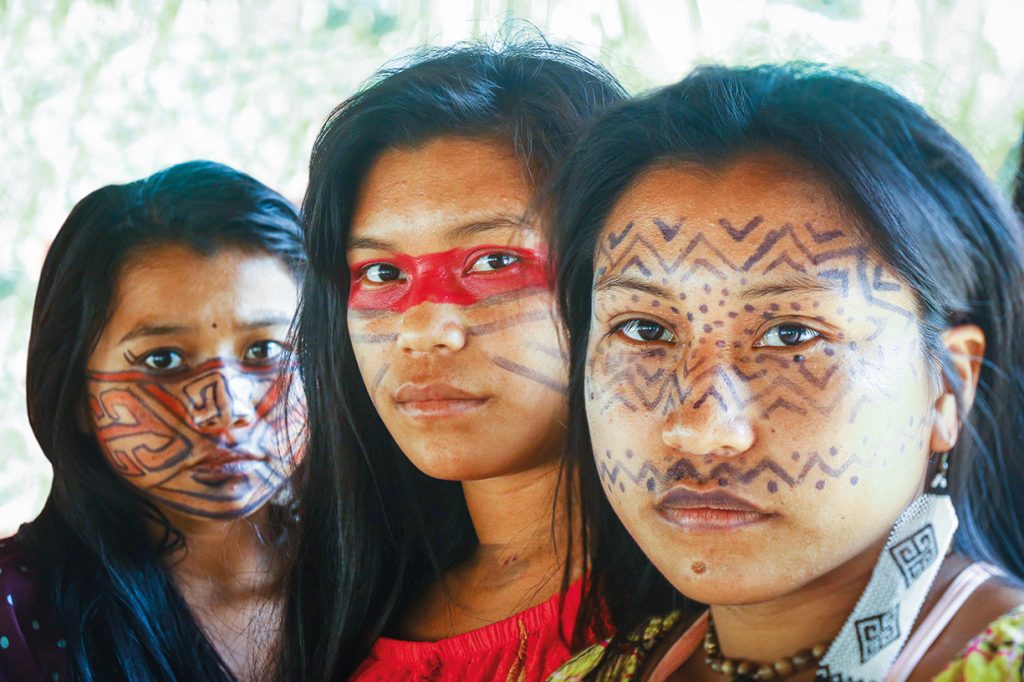
Tres mujeres jóvenes Huni Kuin con diferentes estilos de pintura facial kene en urucú rojo y jenipapo oscuro

1951: the epidemic

In 1946, a group of six Huni Kuin men from the Peruvian side established voluntary contact with the outside world — they were seeking access to metal tools. Until then, the Huni Kuin of Peru had lived in relative isolation for decades.

Five years later, the German travelers Schultz and Chiara visited the Huni Kuin villages of the Curanja. They found eight communities with populations ranging from 20 to 120 people. They estimated that the people numbered between 450 and 500 in total.

As a consequence of that visit, a measles epidemic spread through the villages. Between 75 and 80 percent of the adult population died.

The Huni Kuin interpreted the catastrophe through their own worldview: the photographs and films made by the visitors had captured the outer image of the body (the yuda) and in doing so had weakened the yuxin of the people, leaving them vulnerable to the disease. The catastrophe, beyond being biological, was also spiritual.

From that moment when they nearly disappeared, the people began a process of unceasing reconstruction.


The recovery: from 450 people to a nation of 14,000

The second half of the 20th century is the story of an extraordinary reconstruction.

In the 1970s, the missionary organization SIL (Summer Institute of Linguistics) created the village of Balta in Peru for the Huni Kuin of the Curanja River, concentrating around 800 people — an unusual scale for a people that had always distributed themselves in small groups. The SIL developed literacy materials in Hãtxa Kuĩ, although its evangelical agenda suppressed many of the people’s ceremonial practices.

In Brazil, the path took a different direction. In 1978, CIMI began working with the Huni Kuin in Santa Rosa, supporting their political organization. In 1985, the people carried out the self-demarcation of the Kaxinawá do Rio Jordão Indigenous Territory, in one of the first cases of indigenous self-demarcation in Brazil. The Huni Kuin traced the boundaries of their own territory before the State did so. A year later, the demarcation was recognized by the federal government.

In 1987, the indigenous filmmaker Siã Huni Kuin directed Fruto da Aliança dos Povos da Floresta, a documentary about the alliance between indigenous peoples and rubber tappers in Acre, in the time of Chico Mendes. The camera that a generation before had been read as a threat to the yuxin now became a tool of the people themselves.

Throughout the 1990s, cultural recovery accelerated. The rituals of the Katxanawa, the Nixpupimá, and the Txidin were celebrated with renewed force. Bilingual schools were created in each Indigenous Territory. Huni Kuin teachers published books in their own language with the support of CPI-Acre.

And from the 1980s onward, Ibã Huni Kuin documented the sacred huni meka songs of his father Tuin — research that decades later would give rise to the Huni Kuin Artists Movement MAHKU and bring the people’s worldview to the Venice Biennale.

Today the Huni Kuin number approximately 14,000 people in Brazil and 2,400 in Peru, distributed across twelve Indigenous Territories. From the 450 survivors that Schultz counted in 1951, the people of the true people have traveled a path of reconstruction encompassing territory, language, ceremony, education, and art.

Huni Kuin Worldview

The Huni Kuin shamanic system includes two distinct specialties: the dauya (literally “the one who has remedy,” the herbalist) communicates with plants. He knows the names and uses of hundreds of leaves, barks, and roots, and heals with plant medicine. His knowledge is learned with patience, alongside another specialist, and requires fine memory and acute perception. The dauya does not need to fast: he hunts, fishes, has a normal conjugal life, lives like any other adult man. His power lies in sweetness, in the dau bata*.

The mukaya is something else. He communicates with spirits. One does not choose to become a mukaya: the yuxin choose the initiate and give him the muka. His power lies in bitterness, in the dau muka*, and it is paid for with severe renunciations. Where the dauya heals the body with plant matter, the mukaya confronts the invisible. The Huni Kuin say today that the true mukaya (those who contained muka as a substance) have disappeared.


The trial of the mukaya

The mukaya (the shaman who contains muka in his body) occupies the deepest place of Huni Kuin knowledge. Muka is a bitter quality, the same one that ayahuasca has when tasted, the same as certain plants that teach through intensity. The mukaya can extract illness from another’s body, can perceive what others cannot see.

The Huni Kuin say that the true mukaya have disappeared. But the memory of what that initiation meant remains alive in the words of the elders. Siã Osair Sales described it thus:

To become a pajé, the aspirant goes alone into the forest and ties his entire body with envira. He lies down at a crossroads with his arms and legs spread open. First come the night butterflies — the husu — and cover his entire body. Then come the yuxin, who devour the husu until they reach his head. Then the aspirant embraces the being with force. The being transforms into murmuru, the thorn palm. If the aspirant is strong and does not let go, the murmuru transforms into a snake that coils around his body. He keeps holding on. It transforms into a jaguar. He continues gripping it. And so it goes, from form to form, until the aspirant holds nothingness. He has passed the trial.

The initiation of the mukaya is a path through all the forms of fear. Each transformation tests the ability to hold without letting go, to remain when everything changes. In the end, what remains between the hands is that which has no form, and that is muka. Power is found in what remains when all forms have dissolved.

Today, although the Huni Kuin consider that the great mukaya are no longer here, the ability to communicate with the yuxin is preserved by many adults, especially the elders.


The origin: Ixã and the first beings

The Huni Kuin creation myth begins with Ixã, the first being, who found himself alone in a newly formed world. Ixã found some gourds (mũti) and from his union with them were born the first human beings: beings of the earth, born from a fruit. They were alive, but they did not yet know how to live: they did not know the songs, nor the names, nor how to organize themselves as a people.

Then a teacher appeared. The Huni Kuin call him Shama yabi txana, “the wise txana bird.” This being taught the first Huni Kuin everything necessary to exist as a people: the division into two halves (Inubakebu and Duabakebu), the sacred songs, the ways of hunting and fishing, the forms of naming and marrying. The entire culture arrived as a transmission from a being who knew the totality.

The teacher’s name reveals something essential. Txana is the japim bird, known throughout Amazonia for an extraordinary ability: it can imitate the song of all other birds in the forest. When the Huni Kuin call their ritual singer txana (the man who guides the nixi pae ceremonies with his voice), they are invoking the same being who taught the first songs.


Yuxin: the force that inhabits everything

Yuxin is the most important word in Huni Kuin thought. No term in English fully captures it — “soul,” “spirit,” “vital force” are partial approximations. For the Huni Kuin, yuxin is the vital force, the agency, and the consciousness present in everything that lives: people, animals, plants, rivers, stones. As a Huni Kuin man recorded by the anthropologist Els Lagrou says: “Without yuxin everything turns to dust.”

In daily life, this network of presences remains hidden: the world shows itself as visible bodies and forms. In special states of consciousness (during nixi pae, in dreams, in the twilight of the forest), the other side of reality reveals itself: the yuxin appear as people, as relatives, as presences that recognize and allow themselves to be recognized.

For the Huni Kuin, the person is composed of three dimensions: the body (yuda), the eye spirit (bedu yuxin, the most mobile, the one that travels during sleep and can be captured by an enemy shaman), and the body spirit (yuda baka yuxin, which remains closer to the flesh).

There also exist the yuxibu: beings that have more yuxin than body. They are the masters of transformation, the owners of the animals, the plants, and medicinal knowledge. The great anaconda Yube is a yuxibu; the solar Inka is another.

Shamanic initiation consists, in large part, of learning to communicate with the yuxibu. The shaman who succeeds in accumulating that power in his body is called mukaya.


Yube: Moon, anaconda, cosmic teacher

Yube is the Moon and the Great Anaconda, a single being with two manifestations. As Moon, it wanes and waxes in the sky; as Anaconda, it inhabits the subterranean aquatic world. It is the principle of everything that transforms, flows, and renews: fertility, cycles, kene designs, nixi pae. The Huni Kuin worldview revolves around this axis.

In the Huni Kuin tradition, the Moon is masculine. The myths tell that in ancient times, Moon was a man who secretly visited his own sister every night. Desperate to know who her nocturnal lover was, she stained her hands with the juice of the jenipapo and marked him while he slept. The next day, the dark designs appeared on her own brother’s face. Moon, discovered, fled to the sky. The jenipapo marks he bore on his body became the first kene (the sacred geometric designs) and the explanation for the lunar phases: Moon wanes because the marks fade, and waxes because they are renewed. The Huni Kuin women, when they paint the body with kene, repeat the gesture of the sister who sought truth on another’s skin.

Another story tells how the hunter Dua Busë, following a tapir through the forest, came to a lake. Each dawn, the tapir gathered jenipapo fruits and threw them into the water, pronouncing words that opened the subaquatic world. One day, a woman emerged from the lake drawn by the fruits: she was Yube Nawa, serpent-woman, inhabitant of the world below. Dua Busë leaped into the water to reach her; she transformed into a boa, into a caiman, into a thorny palm, but he did not let go. Yube Nawa took him to the bottom of the lake, where there existed a village of serpent-human beings living in abundance. There, Dua Busë encountered nixi pae: the beverage prepared from the vine that the serpent beings used in their ceremonies. When he returned to the world above, he taught his people to prepare the medicine. Ayahuasca was not invented by humans: it was revealed by the beings of the aquatic world, from the domain of Yube.


Inka: the fire that fixes form

Inka is the force that endures. If Yube is the moon that wanes and waxes, the water that flows, the anaconda that transforms, Inka is the opposite and complementary pole: the solar god, the fire that never goes out, that which fixes form and gives it duration.

Human life is born from the tension between these two forces. Yube gives movement; Inka gives form. Yube opens; Inka sustains. Life is more Yube than Inka: it changes, transforms, ages, flows. Women are more Yube; men, more Inka. But everyone carries within them something of both forces. The domain of Inka is the destiny that awaits after death, the place where form is fixed forever.

In the Txidin (the great funerary ritual), the chief singer dresses as Inka to accompany the yuxin of the dead toward their final destination: the domain where form no longer changes.


Huni Kuin Songs

The txana is the ritual singer, the sonic guide of ceremonies. His name comes from the txana bird (the japim), known for its ability to imitate the song of all other birds in the forest. The human txana, like the bird, reproduces all the tones of the forest: he is the one who knows the sacred huni meka songs and who leads the nixi pae participants through the visions, controlling the force of the medicine with his voice.

His function is to control the force: to take the participants toward the world of the yuxin and bring them back. The txana does not need to be a mukaya (he does not need to possess muka) but he does need to know the songs with the depth of one who has received them from his elders and has lived them in ceremony.

Ibã Huni Kuin is cacique, pajé, and txana of the Jordão River; his work documenting the sacred songs has promoted both ceremonial continuity and the birth of MAHKU.


The huni meka: the songs that open the world

The huni meka (“our songs” in Hãtxa Kuĩ) are the repertoire of sacred songs that accompany the nixi pae ritual. Each song is a vision converted into sound. The huni meka are transmissions that pass from father to son, from grandfather to grandson, across generations. Each song invokes specific presences (the jaguar, the harpy eagle, the tapir, the stars…) and summons them to the ceremonial space.

Three types of song structure the ritual. The pae txanima are the calling songs: they invoke the force of the spirit of the vine at the beginning of the ceremony. The dautibuya are the vision songs: they accompany and guide the images that nixi pae reveals.


Kene: The designs that come from Yube

The Huni Kuin paint the body with geometric designs traced by hand on the skin with the dark juice of the jenipapo. Fine lines, straight and curved, covering the face, the arms, the legs, the torso. These designs are called kene, and in Hãtxa Kuĩ, Kene Kuĩ means “true design”: they are a visual language that contains in its strokes the worldview of the people, the relationships between beings, the ways of living and naming the world.

The origin of kene is Yube. In the time of the primordial flood, when many Huni Kuin were transformed into beings of the forest, Yube slept in a hammock covered with designs. The waters transformed him into a boa, and the boa kept all the wisdom of kene.

The transmission of kene is exclusively feminine and matrilineal: the woman who masters the designs is called aĩbu keneya (design master). Those who reach the greatest depth have received their strokes during sleep or in nixi pae.

Huni Kuin community life

The daily life of the Huni Kuin is distributed across more than one hundred villages spread along the rivers that cross their twelve Indigenous Territories. Unlike other peoples of the region, who concentrate along a single river or in a few communities, the Huni Kuin form a broad network of settlements connected by water, forest trails, and kinship ties.

Each village is organized around extended families. The dual system of the two halves (Inubakebu and Duabakebu) structures life from birth: an Inubakebu always marries a Duabakebu, and names are transmitted from grandparents to grandchildren in alternating generations. This naming system creates a network that connects each person to their ancestors and to the half of the cosmos to which they belong. In the village, knowing someone’s name is knowing which half they belong to, who their grandparents were, and whom they may marry.

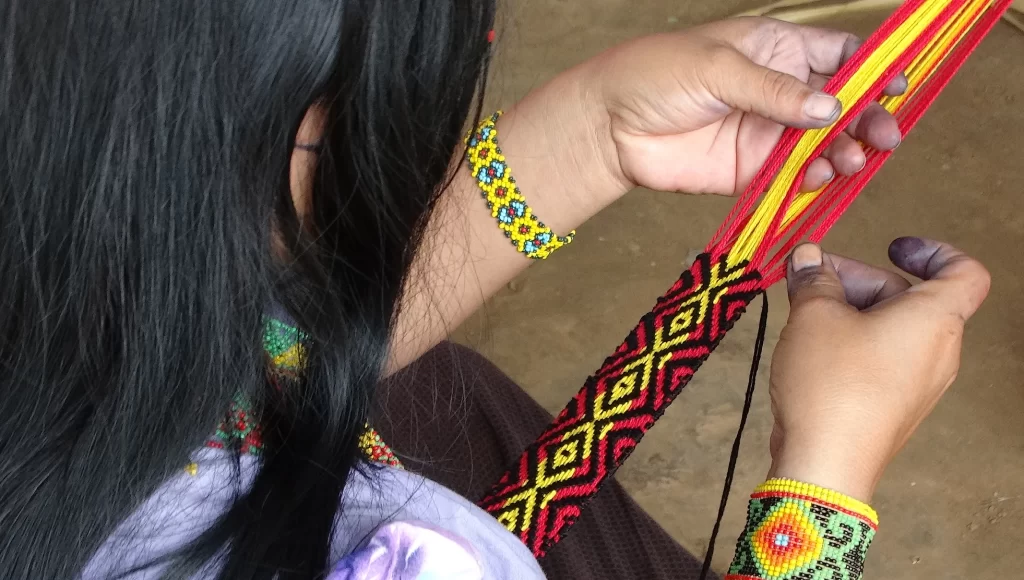
Men acquire throughout their lives the knowledge and strength to deal with the outside: they hunt, fish, build houses, farm, lead rituals, and travel beyond the village. Women produce what constitutes the cultural and social identity of the people: they cook, harvest, process cassava, prepare caiçuma, weave cotton, mold ceramics, and are the guardians of kene, the sacred designs transmitted from mother to daughter, from grandmother to granddaughter.

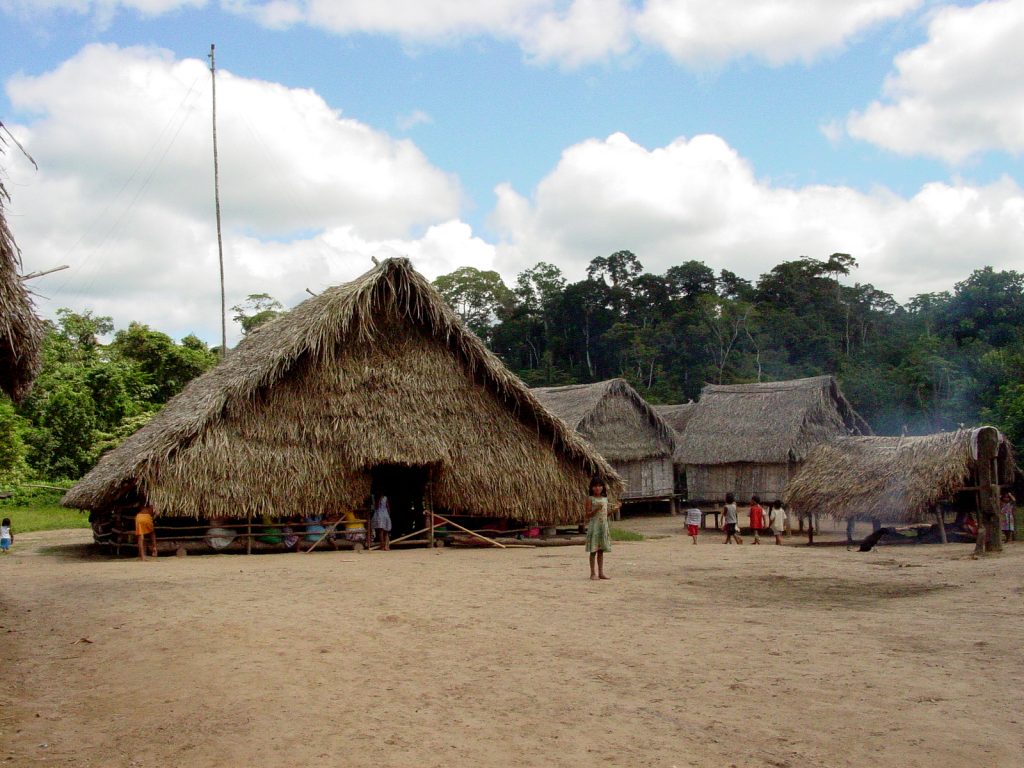
Aldea Huni Kuin con casas comunales de techo de paja, niños en el patio de tierra y selva amazónica al fondo

The Huni Kuin village

The traditional Huni Kuin dwelling is called shubuã: a great collective house built with palm leaves, where several families shared a single roof. Along its sides, each family maintained its own hearth and hammocks. The central corridor was a space for circulation and gathering, and the center of the house was the space for rituals and celebrations.

The shubuã continues to be built as the ritual heart of the village: the space where nixi pae is celebrated, where the huni meka songs sound, where the two halves come together.

Today families live in independent houses, generally on stilts along the riverbanks, with wooden walls and palm or zinc roofing. The houses face the river and are arranged with generous space between them, surrounding an open central plaza called tankina, where meetings, ceremonies, and collective gatherings are held.

When a young man marries, he leaves his parents’ house and moves in with his wife’s parents. This residence pattern weaves the village around the women: they remain close to their mothers and grandmothers, sustaining the continuity of the home, the kitchen, and the transmission of everyday knowledge.

Women occupy their own irreplaceable place. The woman who masters the kene designs is called aĩbu keneya (design master). The transmission of kene is exclusively feminine and matrilineal: from mothers and grandmothers to daughters, through practice, song, and observation of the yuxibu of the forest. The women who master kene most deeply are connected to Yube; they have received their designs during sleep or in special states of consciousness.

When a village is abandoned, the forest reclaims it completely in less than five years, making houses and paths disappear beneath the green canopy; the village was always a clearing that the forest lent.

Mujer Huni Kuin tejiendo a mano una cinta con diseños kene en hilos rojos, amarillos y negros, con pulseras de mostacillas y dedos manchados de jenipapo

Huni Kuin food

The diet rests on three pillars: sweet cassava (atsa), plantain (mani), and corn (dunu).

Corn (dunu* in Hãtxa Kuĩ) belongs to the pole of Inka; the eternal sun, the fire that never goes out, everything that fixes form and gives it durability. Corn is solar food, an attribute of the masculine side of the cosmos. That is why it occupies the center of the two major Huni Kuin rituals. The Katxanawa is celebrated during the green corn season, between December and January, when the first tender ears are harvested: the entire festival revolves around the corn that returns each year. For five to six days, the village dances around the katxa, the hollow log, calling one by one upon the cultivated plants by name, where the corn song has its specific place. In the Nixpupimá, the initiation that transforms children into bedunan and txipax, the apprentices eat only caiçuma made from green corn for five days; corn is the food of passage.

With cassava they prepare porridges, purées, green broths, and leaf-wrapped parcels. With plantain, harvested year-round thanks to the diversity of cultivated varieties, they prepare mingaus, purées, and accompaniments for meat.

The peanut (mundubim in Portuguese, tama in Hãtxa Kuĩ) is present in nearly every preparation: toasted, pounded, in paste, as a condiment for caiçuma, or as a companion to meat in the naikĩ (according to the naikĩ rule, all meat (from hunting or fishing) that comes to the table must be accompanied by a vegetable that neutralizes its animal yuxin; without it, the meat poisons the eater).

The Huni Kuin also maintain a system of dietary restrictions linked to the notion of yuxin. After receiving kambô, the diet is reduced to cassava and corn for three days; meat, sweets, salt, and condiments are removed so that the cleansing may be complete.

The Huni Kuin call the act of eating “piti xarabu” (the care of eating): food is part of the balance between body, spirit, and territory.

One rule runs through the entire diet: meat is never eaten alone. The yuxin of the animal needs to be accompanied by a vegetable that modulates and balances it. This habit is called naikĩ; chewing together, in the same bite, animal food and plant food. Plantain and peanut are the most frequent companions of meat. Anyone who eats meat without a vegetable is exposed to an imbalance that affects body and spirit.

The beverage that accompanies the day is called mabex in Hãtxa Kuĩ (caiçuma in Portuguese) and is prepared with cassava or corn. In its everyday version, mabex is served fresh, sweetened with ripe plantain, sweet potato, or peanut. On festival days, caiçuma is transformed into masato: the process is initiated by the women, who leave the beverage to ferment for three to five days inside a hollow paxiúba trunk, covered with plantain leaves. The village dances for five days around the trunk; on the sixth, guests arrive from other communities.


Cultivation: the roça de coivara

Huni Kuin agriculture is called roça de coivara, a system of slash, burn, and plant that has been adapted to the rhythms of the forest for centuries. Each roça is cultivated for two to three years and then rests for eight to fifteen, until the forest reclaims it and the earth recovers its strength.

Opening a roça is a ritual act in which the men arrive at the site painted red with urucum (the color of the forest spirits), and take rapé to receive strength before the felling.

A short distance away, the women sing to the yuxin of the forest so that the fire will be strong and the harvest abundant. The men light the burn and the ashes fertilize the soil.

Planting follows an order where men and women complement each other; the men plant corn, cassava, and plantain. The women plant cotton, urucum, and feijão.

Peanut (tama) is planted near the houses. Women and children harvest it together, digging in the low furrows.

The harvest is the women’s task. They cut the plantain with a machete, extract the cassava roots with an axe, and while harvesting, replant the stems for the next season. The gesture of gathering and returning at the same time closes a cycle where the earth gives and receives in the same movement.

Alongside food crops, the roça harbors plants that accompany other dimensions of life: cotton for textiles, urucum for body painting, and jenipapo (shanê) for the kene designs that women trace upon the skin.


Hunting and fishing

Among the Huni Kuin, hunting is a male activity. The boy receives his first bow at the age of two, made to his scale by his father or maternal grandfather, and learns to use it before he walks far from the village. By eight or nine years of age, he begins to accompany his father on outings. After the Nixpupimá initiation, the young man may hunt alone or with his brother.

The bow remains present on every outing, although the shotgun has been used for decades. The dependence on cartridges, which come from the outside world, has altered the balance: when prices rise or supply is interrupted, the hunter who never learned to hunt with a bow is left without a tool. Some communities have begun to recover the teaching of the bow, to depend only on what the forest can provide.

Three prey define the true hunter: the tapir (hanta), the deer (wedu), and a medium-sized type of peccary (white-lipped peccary, queixada, yawa). The young man only receives the full recognition of the community after hunting each of these animals. They also hunt pacas, agoutis, monkeys, curassows, and other forest birds.

At night, during the new moon, hunters go out by canoe with a torch to seek caimans: the red reflection of the animal’s eyes betrays it in the darkness.

Panema accompanies the hunter as both shadow and teaching. If the apprentice eats the first prey he kills, he loses his hunting luck for life. If he eats the animal’s head (the best part), he transgresses a rule requiring him to exchange it with the txai, the maternal grandfather. In contrast, the shaman mukaya does not hunt, for his muka makes him perceive animals as relatives.

Sananga accompanies the hunt. Hunters apply it to their eyes before important outings or after periods of panema.

Fishing with timbó is a collective act that has two versions depending on what type of water one enters. In small streams, puikama is used, a shrub cultivated in the gardens: the women collect the leaves and flowers, the men pound them in a mortar reserved only for that purpose and compress the mass into one-kilo balls (tunku) that they wrap in banana leaves or rubber until the day of the fishing. When the time comes, the entire village participates: the timbó is diluted in the current, the fish rise stunned to the surface, and children, women, and elders capture them with conical nets (kuxawe). It is a festive fishing activity — food for the day and a bond between generations.

In the lakes, things are different. There they use sika*, a root so poisonous it can kill a human. And the lakes are inhabited by the kape caiman, the dunuan anaconda, piranhas, the kuxuka aquatic monsters, and the yuxin kudu boto dolphin. To enter a lake to fish with sika is to enter the territory of the subaquatic world of Yube. That is why only adult men go, in groups, and never with women or children.

The rivers mark the rhythm of life and customs: during the dry season, the beaches are exposed and fishing with timbó is abundant; with the rains, the rivers swell, the fish disperse, and hunting increases because animals concentrate on terra firme.


The great Huni Kuin rituals

Three rituals form the backbone of Huni Kuin ceremonial life. Each one marks a different moment in the community cycle: fertility, initiation, and farewell.

The Katxanawa is the festival of fertility. For five to six days, the two halves of the people represent the encounter between the forest and the village, between the wild and the domestic. The men of the Inubakebu half go deep into the forest, paint their bodies, and assume the identity of yuxin — spirits who return from the forest. They carry the katxa, a hollow paxiúba trunk that represents the cosmic womb.

The Duabakebu receive them in the village with weapons raised; afterward, the weapons are lowered and the two groups dance together around the katxa. The men from the forest offer game meat; those from the village offer fish.

The Nixpupimá is the rite of passage. Every three to four years, during the green corn season, the children are initiated and become full members of the community. The ritual transforms the bakebu (children) into initiated men and women (bedunan and txipax). The bodies are painted from head to toe with jenipapo kene. The teeth are stained with nixpu, a plant that produces a brilliant black: the visible mark of having passed through initiation, which remains inscribed on the body for weeks, and forever in the spirit.

The Txidin is the funerary ritual. It is celebrated after the death of a leader or an important shaman, and its function is to protect the living from the yuxin of the dead, which tends to cling to the world of the living. The txana xanen ibu (the chief singer) dresses as Inka: he wears the cushima, a long garment completely covered in kene, and the maite, a headdress of royal eagle feathers.

The dewe songs that are sung through the night are the most archaic in the Huni Kuin repertoire; they describe the creation of the world. The dances accompany the yuxin of the dead toward the domain of the ancestors, toward the solar world of Inka, where form is fixed forever.


Technology and connection

During the 1990s, communication between villages relied on UHF radio frequency. In 2011, Ibã Huni Kuin launched the blog that would give rise to MAHKU, connecting the sacred songs with the digital world for the first time.

Smartphones appeared between 2012 and 2015 in villages near Tarauacá, Jordão, and Feijó. But real connectivity only changed with Starlink, which began operating in the Amazon in September 2022.

The Conexão Povos da Floresta project (driven by COIAB and other organizations) has connected more than fourteen hundred Amazonian communities, with kits that include a satellite antenna, computer, phone, and solar panel. By 2023, Starlink already had clients in 90% of Amazonian municipalities.

Huni Kuin connectivity divides into three zones: the villages of Tarauacá, Jordão, and Feijó have stable internet and the youth are on WhatsApp, YouTube, and Instagram; those of the middle Purus receive intermittent signal; those of the Alto Purus, on the border with Peru, still communicate mainly by UHF radio, with only a few Starlinks installed since 2024.

WhatsApp has become a tool for political coordination among the twelve Indigenous Territories: the communities use it to report invasions, coordinate meetings between villages, organize healthcare, and market crafts directly to buyers in the cities.

The territorial agents of the TI Katukina/Kaxinawá have learned to operate drones with artificial intelligence to monitor forest invasions, covering the territory in half the time of a patrol on foot.

The arrival of the internet also brings concerning problems that the Huni Kuin themselves acknowledge. The researcher Nicole Grell, from the USP Center for AI, documents the pattern in indigenous villages throughout Amazonia: “Even where the indigenous language remains the mother tongue, when it comes to writing on WhatsApp or social media, the language that prevails is Portuguese.”

Joaquim Mana, Huni Kuin linguist at UFAC, puts it in other words: “The new generation hears and understands Hãtxa Kuĩ, but prefers to speak in Portuguese.”

Yaka Huni Kuin, artist of MAHKU, observes that sustained contact with the outside world weakens the ability to communicate with the animals and presences of the forest.

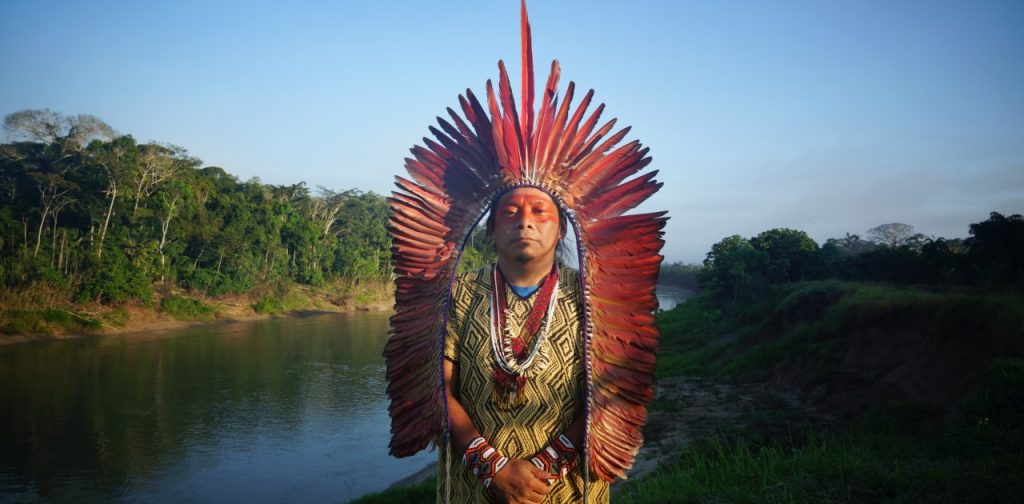
Líder Huni Kuin con gran tocado radial de plumas rojas de pie junto a un río amazónico al atardecer, con la selva de fondo

🌿 The Huni Kuin Forest

The forest of the Huni Kuin stretches along seven rivers in the western Brazilian Amazon, from the headwaters of the Envira to the banks of the Purus, traversing one of the most biologically rich regions on the planet. In this territory, water, forest, animals, and plants form a network where each presence sustains the others.

The forest and biodiversity of the Huni Kuin

The Huni Kuin territories harbor diverse forms of forest that interweave along the rivers:

Terra firme forest sustains the great trees, while the seasonally flooded forests (várzea and igapó) occupy the river margins during the rainy season and shelter palms, shrubs, and vegetation that renews with each flood.

Along the riverbanks, vegetation creates corridors of life where at least 467 species of medicinal plants, more than 200 species of fish, as well as caimans and an enormous variety of aquatic beings are concentrated.

Water is the backbone of Huni Kuin life: the rivers guide movements between villages, sustain fishing, feed the riverside crops, and mark the rhythm of the seasons. During the dry season, the beaches are exposed and life concentrates in the pools. With the rains, the forest floods and the paths change.

The forest has places where yuxin concentrates, and others where it is barely felt. The ravines (where the earth opens and reveals its deep layers), the lakes (where the still water reflects the other world and guards the aquatic beings of Yube), and the great trees (especially the samaúma, refuge of the hida yuxin) are the three points where spiritual force becomes most dense. Walking through the forest means crossing a charged geography: each zone calls for a different mode of presence, and some places are avoided or crossed in silence.


Huni Kuin Animals

In the Huni Kuin worldview, the animals of the forest are bearers of yuxin, of history, and of teaching.

The jaguar (inu) gives its name to one of the two halves that form Huni Kuin society. The Inubakebu (children of the jaguar) embody the solar pole — hard, eternal: the principle that fixes form. To be Inubakebu is to carry in one’s body the nature of the jaguar, the force that endures.

In the shamanic initiation, the jaguar is the definitive trial: the apprentice, alone in the forest, must endure a sequence of transformations of the yuxin (night butterflies, thorn palm, snake) until the being transforms into a jaguar. The one who holds without letting go receives the power, the muka: the shamanic substance that makes him a mukaya.

The tapir (hanta) — in the story of the origin of nixi pae, it is a tapir that guides the hunter Dua Busë to the lake where Yube Nawa lives. The tapir frequents the river margins, seeks the lakes, moves between land and water — an intermediary between the terrestrial world and the domain of Yube. It is an animal that acts as a shaman, and also the supreme prey that defines the adult hunter.

The queixada (yawa, the white-lipped peccary) is an Amazonian wild pig that moves in herds of dozens or hundreds of individuals through the terra firme forest.

In Huni Kuin mythology, the queixadas were humans in ancient times. A recurring myth among the Pano peoples tells that a group of people was transformed into queixadas for having transgressed some fundamental rule. Since then, their herds move through the forest with an organization reminiscent of a village: they have a leader, they move together, they share territory, and they protect one another.

When the shaman mukaya encounters a herd of queixadas, he sees transformed relatives. For the Huni Kuin, the queixada is one of the three prey that define the adult hunter, along with the tapir and the deer.

The txana bird (the japim of the forest, Cacicus cela) is a weaver bird that hangs its nests in clusters from the highest branches, known for reproducing the song of all other birds. That is why the human ritual singer bears its name. In Huni Kuin mythology, the bird Shama yabi txana, “the wise txana bird,” was the child-genius who taught the first Huni Kuin everything that makes them who they are.

The caiman (kape) inhabits the rivers and lakes of Huni Kuin territory as guardian of the aquatic world of Yube. One of the most powerful myths of the people tells the origin of the bridge between the world of the living and the world of the dead.

The being that creates this bridge is called Kapewë Pukenibu, and it has the form of a caiman. Kapewë Pukenibu extends its body over the abyss that separates the earth from the domain of the ancestors and allows the yuxin of the dead to cross to the other side.

Those who fall from the bridge are transformed into fish, into beings of the water, into inhabitants of the subaquatic world that Yube governs. The myth reveals a cosmic function of the caiman: it is the threshold between worlds, the being whose body becomes a path.

For hunters, its presence signals the places where the force of the water concentrates. At night, during the new moon, the men go out by canoe with a torch: the eyes of the caiman return a red glow in the darkness, revealing the animal before it moves.

The boto (kuxuka) is the pink river dolphin of the Amazon (Inia geoffrensis), a being that lives on the border between water and humanity. The Huni Kuin recognize it as yuxin: “it cries like a person, it looks like a person, it is a person.” Its presence in the lakes is a sign that the subaquatic world of Yube is near.

For Huni Kuin fishermen, the boto belongs to the deep domain of the lakes, the same territory where anacondas and water beings dwell. During fishing expeditions with sika (the poisonous root used only in lakes), the appearance of the boto is a warning: where the pink dolphin emerges, the border between the visible world and the world of Yube grows thin. That is why only adult men enter the lakes, in groups, prepared.

Throughout Amazonia, the boto has a reputation for transforming into a handsome man who seduces women at riverside parties. The Huni Kuin share this tradition and integrate it into their understanding of yuxin: the boto changes form because it possesses a yuxin so strong that it can adopt human appearance. Its capacity for transformation brings it close to the yuxibu, the beings that have more spirit than body.

Monkeys populate the canopy of the Huni Kuin forest in a diversity that includes the capuchin, the spider monkey, the howler monkey, and several species of tamarin. In the people’s worldview, monkeys are beings that teach by example: the capuchin is the master who taught the first humans the techniques of courtship and sexual life.

This myth, documented among several Pano peoples of the Juruá, places the capuchin monkey as a being that mastered before humans an essential knowledge for the continuity of the people.

The howler monkey (isu) has another function: its song at dawn marks the awakening of the forest. Hunters read in the direction and intensity of its call signals about the movement of other prey. In the network of yuxin that runs through the forest, monkeys occupy the high stratum, the canopy where light arrives first.

The shaman mukaya perceives the animals of the forest as relatives. When he encounters a jaguar, he calls it brother-in-law; when he sees a queixada, he calls it uncle. For the mukaya, eating a relative would be a transgression, which is why the shaman stops hunting.

Master plants in the Huni Kuin tradition

In the Huni Kuin forest, certain plants are presences with their own yuxin — beings that teach, cleanse, protect, and open paths of knowledge.

The Huni Kuin distinguish two types of medicine: dau bata (sweet medicine) and dau muka (bitter medicine). Sweet medicines are the leaves of the forest, plant baths, accessible remedies that anyone can prepare.

Bitter medicines are the powers of the mukaya, plants that demand dieting, and invisible presences that only the pajé can handle. Muka is the same root that gives the mukaya his name: the man taken by bitterness. Rapé, sananga, kambô inhabit the border between both worlds; nixi pae belongs to the territory of bitterness.

At the center of everything is the nixi (Banisteriopsis caapi), the vine par excellence, called cipó in Portuguese. Its decoction with the leaves of chacruna (Psychotria viridis) is nixi pae, the “intoxication of the vine”: the greatest medicine of the Huni Kuin people. It is the plant that Yube Nawa (serpent being) revealed to Dua Busë at the bottom of the lake.

Upon drinking nixi pae, the bedu yuxin (the eye spirit) of the participant travels. What they see are the yuxin of the forest revealing themselves as what they always were, in their true form. The sacred huni meka songs that the txana sings throughout the night are the net that guides that journey: first upward, toward the visions, then back, toward the body that waits.

Sananga (Mana Heins in Hãtxa Kuĩ) are the drops that prepare the eyes to see. Extracted from the roots of plants of the genus Tabernaemontana (Tabernaemontana sananho and T. undulata), it is applied directly to the eye: the burning is immediate and intense. What comes afterward is a clarity that the Huni Kuin describe as seeing the forest for the first time.

It has three traditional uses: hunters receive it before major outings to sharpen their vision, read tracks, and anticipate movements. As a prelude to nixi pae, it prepares the eyes for the visions that the vine will bring. And it is used to cleanse panema, the bad luck that accumulates especially in the gaze of one who has hunted poorly or carried yuxin unknowingly.

There is a mythic echo that sustains all these uses: in the legend of the origin of nixi pae, Yube Nawa pours a liquid into the eyes of Dua Busë before revealing the medicine to him. Sananga was already there, at the origin of true seeing.

Kampu is the medicine of the giant monkey frog, which the Huni Kuin call kampũ (Phyllomedusa bicolor). It cleanses the physical body of what has accumulated; as the pajé Tuwe Huni Kuin says, “it cleanses us psychologically, materially, and spiritually, and drives away panema.”

It always lives near water, on the branches that hang over the streams. Its back is bright green; its belly, creamy white. It moves slowly, as if knowing that the forest protects it. At night, the male sings: a long, repeated call that hunters learned to follow in the darkness to find the frog.

The Huni Kuin origin myth tells that the village was gravely ill. The pajé had tried all known medicinal plants. He then decided to go deep into the forest under the effect of the sacred plants, in that state between the everyday world and the world of the yuxin. He received a visit from a female forest spirit who carried a frog in her hands. She taught him to collect its secretion and apply it. The pajé returned to the village and healed his people.

From then on, he was called Pajé Kampu. When he died, his spirit remained in the frog, continuing his mission of protecting the health of those who care for the forest. The secretion received the name kambô in his honor.

The name in Hãtxa Kuĩ is kampũ. The English “kambô” is a direct adaptation of the Huni Kuin name.

The traditional application is performed at dawn, outside the living space, near the forest. The recipient is fasting. The applicator prepares small marks on the skin; women receive them on the ankle, men on the arm.

The dried secretion of the frog is moistened with water and applied over each mark. The subsequent diet is strict: only cassava and corn for three days, without meat, sweets, salt, or condiments.

The jenipapo (shanê in Hãtxa Kuĩ, Genipa americana) is the plant that unites cosmology and art. Its dark juice, applied to the skin by the hands of an aĩbu keneya (design master) woman, draws the kene: the sacred geometric designs that contain the worldview of the people in every stroke.

The origin of kene is inscribed in the myth of Yube. In the time of the primordial flood, many Huni Kuin were transformed into beings of the forest. Yube slept in a hammock covered with designs. When the waters transformed him into an anaconda, the boa kept all the strokes on its skin. Since then, the kene designs reproduce the patterns that appear on the skin of the great anaconda: every line, every angle, every curve that a woman traces with jenipapo on another person’s body repeats the designs that Yube carries on its scales. To paint with jenipapo is to copy from the skin of the ancestral boa.

The jenipapo also appears in the myth of the Moon: when the sister discovered that her nocturnal lover was her own brother, she marked his face with shanê juice while he slept. The next day, the dark marks revealed the truth. Moon fled to the sky with the designs on his body, and those designs became the lunar phases: Moon wanes because the jenipapo marks fade, and waxes because they are renewed. Two myths, the anaconda and the moon, converge in the same plant. The jenipapo is the ink that reveals what was hidden.

The ruku (urucum, Bixa orellana), also called achiote, produces the red that protects. Its intense pigment covers the bodies of men before opening a new roça: painted red, they enter the forest for the felling and burning.

The red of urucum is the color of the yuxin of the forest. When men paint themselves with ruku before working in the forest, they adopt the appearance of the very spirits that inhabit it: they become visually similar to the presences of the forest. It is a form of spiritual camouflage, a chromatic sympathy that protects the human body by giving it the appearance of that which might threaten it. The yuxin of the forest recognize the red as their own and let pass whoever bears it.

Urucum belongs to the feminine pole of the roça: women plant it, along with cotton and feijão. Yet men use it for the felling.

Nixpu is the plant of the initiation rite, whose juice stains the teeth a brilliant black with the color of the Moon. The initiate with black teeth has already crossed; already a bedunan or txipax, no longer bakebu. Nixpu darkens, marks, separates what was from what is. It is the plant of thresholds.

Along with the use of master plants in ceremonies, one of their most deeply rooted customs is plant bathing, which they practice with great frequency. For these baths, they choose a plant they need (they possess an astonishing knowledge of the surrounding flora), boil it, and bathe with the aromatic water.

Each of these plants has its ancestral name in Hãtxa Kuĩ, has a place in the huni meka songs, and has a function that connects the body with the spirit. The Huni Kuin forest is a network of presences that teach those who know how to listen.

The sacred trees

Among the sacred trees of the Huni Kuin, the tallest is the xunu — the Samaúma (Ceiba pentandra), capable of growing up to sixty or seventy meters in height. The Huni Kuin recognize it as a powerful being. In its aerial roots dwell the nixu, presences from the invisible world.

When the researcher Inbuse guided a visitor to a xunu in the forest, he pointed to a rope hanging from the trunk and explained: through it one can climb to the crown, where all the spirits of the forest are gathered. The Samaúma is the pillar of the world: it unites the aquatic underworld of Yube, the intermediate human plane, and the solar sky of Inka.

The kumã — the cumaru (Dipteryx odorata) is a tree that does not rot, which is why it is said to be very true. The same root kuĩ (true) that gives the people their name (huni kuĩ, true people) names the quality of the tree that resists decay.

It is one of the hardest woods in Amazonia (in Brazil it is called cumaru ferro). Its ashes, dense and robust, are the base of the rapé Huni Kuin Cumaru: they contribute a quality of deep cleansing and grounding. Its seeds contain coumarin, an aromatic compound with a vanilla scent, used in ritual blends. Cosmologically, the kumã belongs to the pole of Inka (the solar, the permanent, that which does not yield).

Wild cacao (Theobroma cacao) grows along the riparian margins of Huni Kuin territory long before the word “cacao” existed in any European language. The most recent genomic science confirms that the Upper Amazon (including the Acre and Purus region) is the center of origin of the species, first domesticated approximately 5,300 years ago, before reaching Mesoamerica.

In 2024, researchers from USP identified three new species of Theobroma in Cruzeiro do Sul, just a few kilometers from Huni Kuin territory. The cacao in rapé Huni Kuin uses the wild tree of the Amazon forest in its ancestral form, whose burned bark contributes warm, reddish ashes to the rapé, with a strength that the Huni Kuin describe as intense and cleansing.

The murici (yapa in Hãtxa Kuĩ) is the tree of daily life. Its small, yellow fruits, with a recognizable acidity, feed the animals of the forest and the families of the village. Its ashes in rapé carry that memory of cleansing acidity.

In the Huni Kuin worldview, the yapa belongs to the domain of the dauya, the sweet, accessible, everyday medicine. It drives away nisũ (laziness, dullness) and gives strength for the tasks of the day. It is the medicine that works in silence, without ceremonial apparatus, sustaining daily life.

The mulateiro (Calycophyllum spruceanum) is the tree of renewal. Its bark peels off periodically, revealing beneath it a bright lime-green wood that gradually darkens until it peels off again — a tree that sheds its own skin. The ashes of mulateiro give rapé a restorative quality, of vigor and regeneration.

In daily life, the mortar where cassava is pounded is made of mulateiro and cumaru: the two trees of rapé are also the two trees of the kitchen, uniting the sacred and nourishment.

The paxiúba (Iriartea deltoidea) has a hollow trunk (tau pustu) and is the central ritual object of the Katxanawa: the katxa, the cosmic womb where the first caiçuma was fermented and where, according to one tradition, the first Huni Kuin emerged from a hollow trunk.

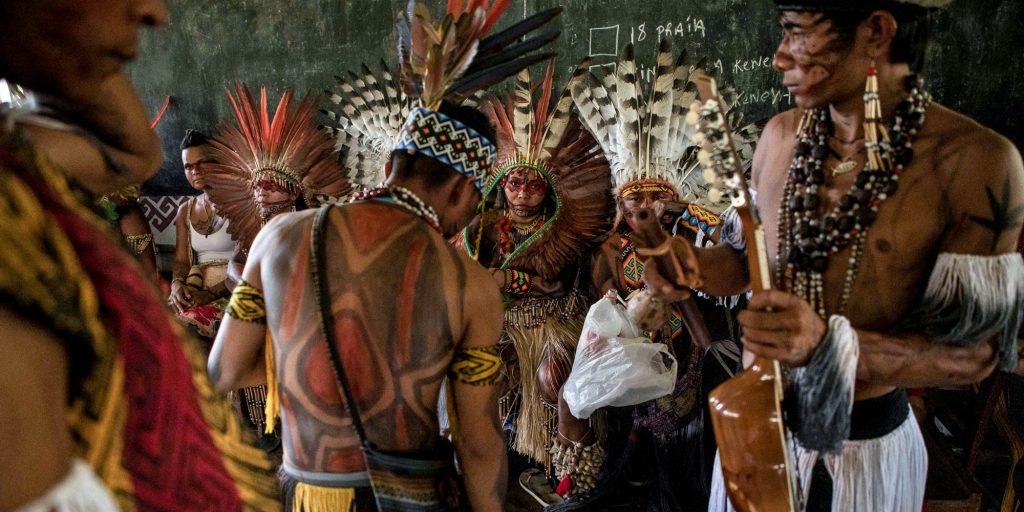
Grupo de hombres Huni Kuin con tocados de plumas, pintura corporal kene y collares de semillas reunidos en una escuela comunitaria con una pizarra de fondo

Music and Video Huni Kuin 🎵

References

Ethnography and anthropology

PIB Socioambiental — “Huni Kuin (Kaxinawá).” Povos Indígenas no Brasil. Instituto Socioambiental. pib.socioambiental.org/pt/Povo:Huni_Kuin_(Kaxinawá)

Lagrou, Els — A fluidez da forma: arte, alteridade e agência em uma sociedade amazônica (Kaxinawá, Acre). Topbooks (2007).

Lagrou, Els — Quem é o dono do yuxin? Cosmologia e arte Kaxinawa. Universidade Federal do Rio de Janeiro (1998).

Kensinger, Kenneth M. — How Real People Ought to Live: The Cashinahua of Eastern Peru. Waveland Press (1995).

McCallum, Cecilia — Gender and Sociality in Amazonia: How Real People Are Made. Berg Publishers (2001).


Worldview, mythology, and Amazonian shamanism

Viveiros de Castro, Eduardo — “Cosmological Perspectivism in Amazonia and Elsewhere.” HAU Masterclass Series, vol. 1 (2012).

UNESCO — “Traditional Knowledge of the Jaguar Shamans of Yuruparí.” Intangible Cultural Heritage (2011). ich.unesco.org/en/RL/00574

Reichel-Dolmatoff, Gerardo — The Shaman and the Jaguar. Temple University Press (1975).


Huni Kuin own publications

Quinet, Alexandre & Kaxinawá, Agostinho Manduca Mateus et al. — Una Isĩ Kayawa: Livro da Cura do Povo Huni Kuĩ do Rio Jordão. CPI-Acre / Jardim Botânico do Rio de Janeiro (2014).

Iglesias, Marcelo Piedrafita & Kaxinawá, Joaquim Paulo de Lima et al. — Shenipabu Miyui: História dos Antigos. Comissão Pró-Índio do Acre (1995).

CPI-Acre — Músicas do Katxanawa: Cultura Huni Kui. Comissão Pró-Índio do Acre (n/d). cpiacre.org.br

Sales, Isaías Ibã Huni Kuin — Nuku Mimawa: Kaxinawá hawe miyuihaibu, danse, danse, hawe nawawehaibu. CPI-Acre (2007).


Ethnobotany and master plants

Pilnik, Marcelo & Argentim, Ana Beatriz — “A culinária Huni Kuĩ do baixo rio Jordão (Acre, Brasil): registros e reflexões.” Boletim do Museu Paraense Emílio Goeldi – Ciências Humanas (2024). scielo.br

Horackova, Hana et al. — “Ethnobotanical study of the Cashinahua of Curanja River, Peruvian Amazonia.” PMC / Journal of Ethnobiology and Ethnomedicine (2023). pmc.ncbi.nlm.nih.gov

Russell, Andrew & Rahman, Elizabeth (eds.) — The Master Plant: Tobacco in Lowland South America. Routledge (2015).

Mabit, Jacques & Giove, Rosa — Sinchi, Sinchi, Negrito: Uso medicinal del tabaco en la Alta Amazonía Peruana. Centro Takiwasi. takiwasi.com


Kambô / kampũ and the frog Phyllomedusa bicolor

Lima, Edilene Coffaci de — “A vacina dos brancos e a vacina do sapo.” Horizontes Antropológicos, SciELO (2017). scielo.br

Daly, John W. et al. — “Frog secretions and hunting magic in the upper Amazon: Identification of a peptide that interacts with an adenosine receptor.” Proceedings of the National Academy of Sciences, 89:10960-10963 (1992).

Chacruna Institute — “Sustainable Practices for Kambô Conservation.” chacruna.net


Art, MAHKU, and contemporary voices

MAHKU — Movimento dos Artistas Huni Kuin. Exhibition catalogue. mahku.com.br

Fondation Cartier pour l’art contemporain — Nixi Pae – Une histoire de l’Amazonie Huni Kuin. Paris (2023). fondationcartier.com

Sales, Isaías Ibã Huni Kuin & MAHKU — Una Shubu Hiwea: O livro da escola viva do povo Huni Kuin do rio Jordão. UFAC / IPHAN (2012).


Territory, biodiversity, and heritage

IPHAN — “Kene Kuin: Patrimônio Cultural Imaterial Huni Kuin.” Instituto do Patrimônio Histórico e Artístico Nacional, Brazil (2025). gov.br/iphan

Aquino, Terri Valle de & Iglesias, Marcelo Piedrafita — Kaxinawá do Rio Jordão: História, Território, Economia e Desenvolvimento Sustentável. CPI-Acre (1994).

ISA — Povos Indígenas no Brasil 2017–2022. Instituto Socioambiental (2023).


Hãtxa Kuĩ language

Kaxinawá, Joaquim Mana — Hãtxa Kuĩ Papira: Livro da Língua Verdadeira. UFAC / SEE-AC (2008).

Camargo, Eliane — “Léxico bilíngue Kaxinawá-Português / Português-Kaxinawá.” Estudos Indígenas. CNPq / UFRJ.


Technology and contemporary life

Bevilaqua, Ciméa Barbato et al. — “Tecnologias digitais e povos indígenas: o caso Huni Kuin.” Ambiente & Sociedade, SciELO (2025). scielo.br

Palka, Grzegorz — Living with the forest: An ethnography of the Huni Kuĩ of the Alto Purus. PhD thesis, University of St Andrews (2025). research-repository.st-andrews.ac.uk

COIAB — Conexão Povos da Floresta. Coordenação das Organizações Indígenas da Amazônia Brasileira (2025). coiab.org.br


Voices and testimonies

Ibã Huni Kuin (Isaías Sales) — Cacique, pajé, and txana of the Jordão River. Professor at UFAC. Founder of MAHKU. Documenter of the huni meka transmitted by his father Tuin.

Ninawa Pai da Mata Huni Kuin — President of the Federação dos Povos Huni Kuin do Acre (FEPHAC). Public voice of the people in international forums on territorial rights and the climate crisis.

Mapu Huni Kuin — Spiritual leader and musician. Disseminator of the Huni Kuin worldview through music and social media.

Joaquim Maná Kaxinawá — Linguist, professor at UFAC. Author of the Hãtxa Kuĩ alphabet and architect of the people’s bilingual school network.

Siã Osair Sales (Pajé Siã) — Cacique of the Alto Jordão. Filmmaker. Director of Fruto da Aliança dos Povos da Floresta (1987).

Tuwe Huni Kuin — Pajé. Quote about kampũ recorded in the document.

Yaka Huni Kuin — Artist of MAHKU. Quote about the effect of sustained contact on communication with the forest.