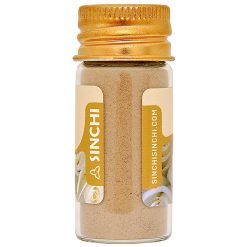
Rapé White Rose
Among the varieties crafted by the Nukini people, some present a more intense and earthy character, while others lean towards more aromatic, lighter or contemplative qualities, as is the case with White Rose.
Its character is gentle and harmonising; a delicate presence that unfolds from a more sensitive and refined dimension, associated with moments of silence, concentration and inner work, where the subtler properties of Nukini rapé are revealed.
🌿 Variety Details
🍂 Composition:
Amazonian mapacho (Nicotiana rustica) — A plant present in numerous Amazonian traditions. Within rapé, it provides strength, body and a deep presence that sustains the whole blend.
Tsunu vegetal ash — The ash of this Amazonian tree appears in numerous rapé varieties. It provides structure, texture and balance to the blend.
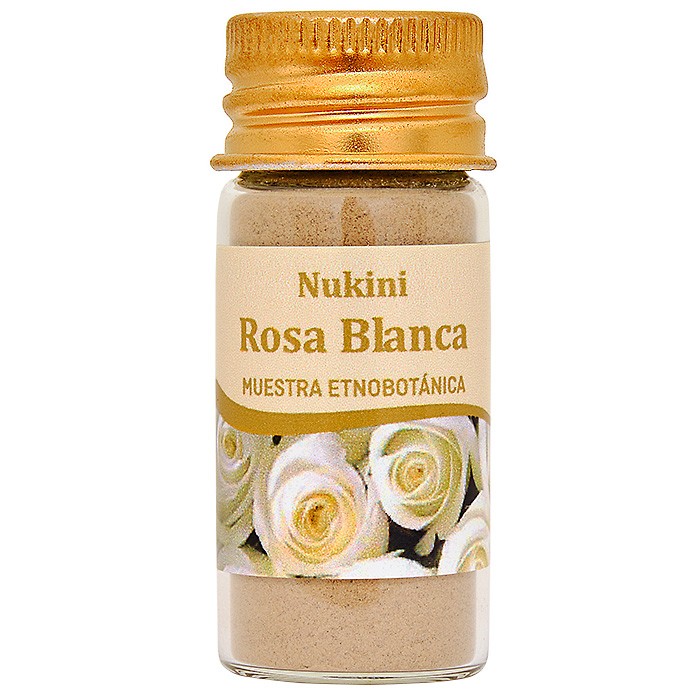
White rose — In this variety, white rose petals are incorporated, giving the preparation its name and helping to define its character. Their presence introduces a gentler, more delicate and contemplative quality.
🍂 Character:
Within the range of Nukini varieties, White Rose maintains a well-balanced profile: Its character is gentle, delicate and harmonising, with a contemplative personality especially suited to moments of retreat and stillness. Compared to varieties of a more intense or earthy character, this variety offers more open and refined qualities, where the floral presence introduces an especially subtle dimension.
Traditionally, White Rose is considered ideal for moments of silence, introspection and prayer, as well as states of quiet concentration and sensitive opening of the heart — the finest and most delicate expression of Nukini rapé.
🍂 Ceremonial use
Within a ceremonial approach, this variety is well suited to moments oriented towards centring attention and creating a space of interiority, and situations where one seeks to cultivate an atmosphere of calm and harmony, fostering a more delicate listening and a more conscious presence.
Its character invites a slow, unhurried relationship with rapé, close to contemplation and serene inner work. In that sense, White Rose tends to feel especially aligned with moments of silence, prayer or quiet concentration, where the experience unfolds gently and gradually.
🍂 Details:
Tribe: Nukini
Region: Alto Juruá, Acre (Brazilian Amazon)
Composition: Amazonian mapacho, Tsunu ash, white rose petals
Balance: Balanced
Use: Amazonian ethnobotanical sample
🌸 The white rose
The white rose and its symbolic dimension
The white rose brings to this variety an especially evocative symbolic dimension. Across different traditions, flowers are associated with qualities of purity, clarity and inner opening, and the white rose is linked to an energy of delicacy, calm and stillness.
Within this variety, the white rose petals introduce a floral nuance that softens the whole blend and opens a subtle, delicate and contemplative character. In that subtle detail one can recognise some of the qualities that define this Nukini variety, especially valued for its harmonic quality and for the way it accompanies spaces of silence, introspection and prayer.
Beyond its presence in the Nukini worldview, the rose has held a deep symbolic place across different traditions. In the Greek world it appears linked to Aphrodite, goddess of love and beauty, and in the Roman tradition this connection continues through Venus. Over time, the white rose has been associated with an expression of purity, a delicate opening and a form of beauty that manifests with gentleness.
Within this variety, that resonance integrates naturally into the plant ensemble, bringing a quality that tempers the firmness of the mapacho and interweaves with the structure of the ashes. The result is a very fine presence, where strength and delicacy coexist in balance, giving rise to an especially harmonious character.
❓ Frequently asked questions
What is Amazonian rapé?
Amazonian rapé is a traditional medicine prepared by various indigenous peoples of the Amazon. It takes the form of a very fine powder made from dried plants and vegetal ashes, blended according to knowledge passed down through generations within each community.
It is applied through a blow into the nostrils using traditional instruments such as the kuripe or the tepi. This gesture forms part of a practice where breath, attention and presence come together with the plant knowledge of the forest.
In numerous communities of the Alto Juruá and other Amazonian regions, rapé accompanies moments of prayer, song, silence or community gathering. Within these traditions, the plant blend is understood as a way of working with the medicines of the forest and with the wisdom transmitted by the elders.
Each people maintains its own combinations of plants, ashes and preparation techniques. This is why Amazonian rapé is best understood as a set of living traditions linked to the forest and to the ancestral knowledge of its peoples.
How is rapé traditionally used?
The use of Amazonian rapé is carried out through a blow that carries the plant powder into the nostrils. This blow is performed with traditional instruments crafted from wood, bone or bamboo. When a person offers the medicine to their own body, the kuripe is used — a small applicator that connects the mouth to the nose and allows the breath to be directed gently. When the blow is shared between two people, the tepi is used — a longer applicator that allows the medicine to be offered with care and precision.
In many Amazonian traditions, the blow of rapé accompanies moments of silence, prayer and inner attention. The person receives the medicine with a calm body and a serene breath. After the blow, attention turns to the breathing and to deep listening, while the plant blend begins to unfold its presence in the body.
In communities of the Alto Juruá and other regions of the western Amazon, rapé accompanies songs, community gatherings and spaces of retreat. The medicine thus appears integrated into a broad body of knowledge about plants, forest and transmission across generations.
Who are the Nukini?
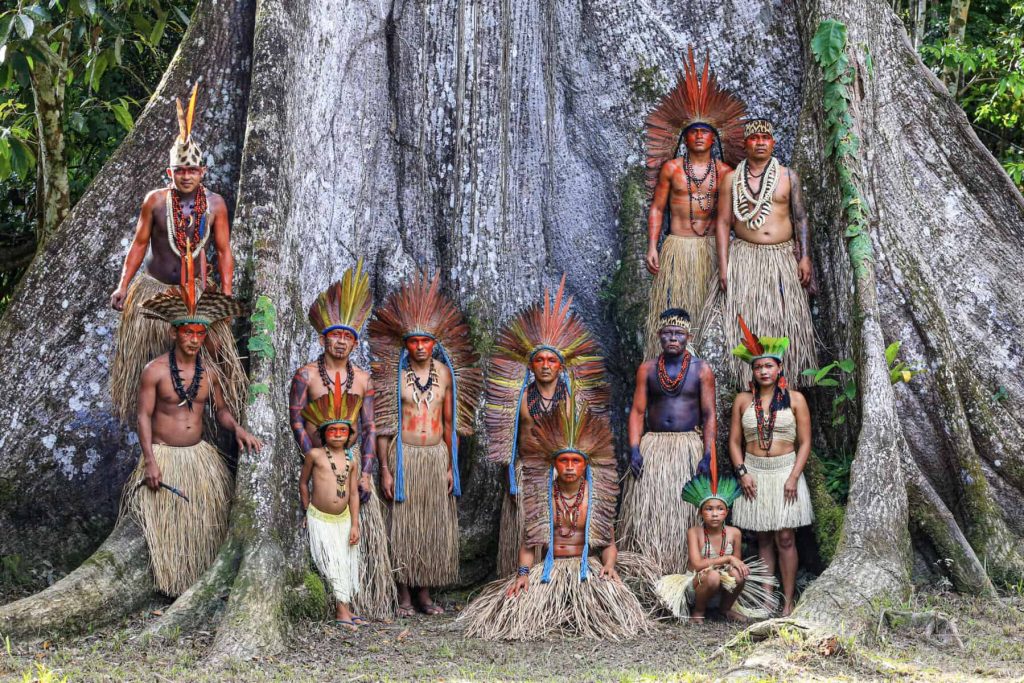
The Nukini are an indigenous people of the western Amazon who live in the Brazilian state of Acre, within the Alto Juruá region — one of the areas of greatest biological richness in the entire Amazon rainforest. Their history, community life and plant knowledge unfold in a landscape of rivers, dense forests and a deep continuity between territory, memory and cultural transmission.
They belong to the broad group of Pano-speaking peoples, present across various areas of the western Amazon. Within that wider context they share certain historical and cultural features with other peoples of the region, though they maintain a distinct identity, tied to their territory, their forms of organisation and their particular ways of relating to the plants, songs and medicines of the forest.
Over time, the Nukini people endured processes of territorial pressure, intense contact with the rubber trade and profound transformations in their way of life. Even so, their continuity has been sustained through community, through the memory of the elders and through knowledge passed down across generations. That continuity is expressed in their bond with the forest, in their collective life and in the enduring nature of knowledge related to plants, music, spirituality and preparations such as Amazonian rapé.
Within the Sinchi editorial universe, understanding who the Nukini are allows each rapé variety to be situated within a living tradition, rooted in the Amazon and sustained by a people with their own history, territory and knowledge.
Where do the Nukini people live?
The Nukini people live in the western Amazon, in the Brazilian state of Acre, within the Alto Juruá region, near the border with Peru. Their indigenous land is located in the municipality of Mâncio Lima, in an area marked by the presence of rivers, tributaries, tropical forests and extraordinary biodiversity.
The Nukini Indigenous Land forms part of a great Amazonian mosaic where indigenous territories, protected areas and vast expanses of forest coexist. Very close to this land lies the Serra do Divisor, one of the most ecologically singular regions of the Brazilian Amazon. This proximity places the Nukini people in an especially rich environment of trees, medicinal plants, birds, mammals and insects, within a forest of enormous botanical and territorial complexity.
Life in this region is organised around water and the forest. The river courses accompany travel, cultivation, fishing, movement and the settlement of families. The forest, in turn, provides materials, food, medicine and a foundation of knowledge that runs through the daily life of the community.
Within this Amazonian territory, the Nukini people maintain a deep relationship with plants, with the memory of their elders and with the medicines of the forest. For this reason, to speak of where the Nukini live also means to speak of the environment that sustains their knowledge and of the landscape where preparations such as Nukini rapé are born.
What role does rapé play among the Nukini people?
For the Nukini people, Amazonian rapé holds a place linked to community life, to moments of gathering and to the relationship with the medicines of the forest. Its presence appears in spaces where the community comes together, shares songs, words and silences, and keeps alive the transmission of knowledge across generations.
Rapé accompanies moments of prayer, concentration and the opening of collective spaces. The gesture of the blow is woven into a broader fabric where song, word and listening form part of a single experience. In these gatherings, the medicine is received with attention and with a disposition that connects body, breath and presence.
Various materials produced by members of the Nukini people themselves describe rapé as part of a body of knowledge related to plants, to the forest and to the memory of the elders. In this context, the use of rapé is understood within a system where each element — plants, songs, territory and community — maintains a continuous relationship.
Rapé also appears in moments of teaching, where younger members participate in community spaces and become familiar with the forms of preparation, the rhythms and the meaning of the medicine within their culture.
In this way, the role of rapé within the Nukini people is situated at the intersection of community life, cultural transmission and the relationship with the plants of the forest.
What characterises Nukini Rosa Blanca rapé?
Nukini Rosa Blanca rapé is distinguished within the range of Nukini preparations by the presence of the white rose as an element that introduces a particular nuance within the plant blend. Within the Amazonian universe, this incorporation is quite unusual, which places this variety in a singular position within the repertoire of rapés associated with the Alto Juruá.
The base of the preparation maintains the traditional structure of many Amazonian blends, with Amazonian mapacho (Nicotiana rustica) and vegetal ashes from forest trees. Upon this base, the white rose is integrated, bringing a character that within contemporary symbolic language is often associated with clarity, openness and gentleness in the work with the medicine.
In the context of the Nukini people, rapé varieties are understood as expressions of the relationship between plants, territory and community. Although ethnographic sources extensively document the use of rapé and its importance within Nukini cultural life, the presence of the white rose responds to an evolution within the blends currently in circulation, where certain plants are incorporated to express specific qualities within each preparation.
The result is a variety that maintains its link with the Amazonian tradition while also introducing a differentiated profile within the Nukini range, recognisable by its name, its composition and its place within the contemporary catalogue of rapés.
Why does this variety incorporate white rose?
The incorporation of white rose in Nukini Rosa Blanca rapé is situated at an interesting point between documented tradition and contemporary evolution of Amazonian blends. Within the available ethnographic sources on the Nukini people and other peoples of the Alto Juruá, the use of rapé is widely described, along with the diversity of plants that may form part of these preparations. However, specific references to the white rose are pointed and concrete.
One of the clearest mentions appears in the work of Ana Clara Muniz da Silva Nukini, included in the Caderno de Resumos do III Seminário dos Acadêmicos Indígenas do Acre, where “rosa branca” is mentioned within the universe of rapé, alongside other plant and symbolic elements. This reference places the rose within the field of Nukini knowledge, though without extensive development in the available literature.
From this type of record, it can be understood that certain current varieties integrate plants that express specific qualities within the blend. In this case, the white rose introduces qualities that, in contemporary symbolic language, are associated with delicacy, openness and a more subtle presence within the whole.
Thus, the incorporation of the white rose can be read as a continuity of Amazonian plant knowledge, where each preparation articulates a particular relationship between plants, intention and community context, maintaining its roots in tradition while exploring new forms of expression within rapé.