
Rapé from the Katukina tribe (Noke Koi):


Cosmovisión Katukina
Los Noke Kuin son conocidos por su rico patrimonio cultural y prácticas espirituales chamánicas. Aunque son menos conocidos que otras tribus como los Yawanawá o los Huni Kuin, comparten con ellos la misma cosmovisión, así como las mismas medicinas sagradas, preparadas con plantas medicinales de la selva.
Los Noke Kuin, al igual que sus tribus sus vecinas, tienen una profunda conexión con la Naturaleza, y una conciencia espiritual que desarrollan a través del uso de la Ayahuasca, una bebida elaborada con plantas psicoactivas, utilizada en ceremonias junto con Kambo, Rapé y Sananga.
Mocha, líder espiritual de los Noke Koi, habla así de la espiritualidad de su pueblo: “Vivimos con los espíritus ancestrales de la medicina: del rapé, ayahuasca, kambó, sananga y todas las plantas que nuestros ancestros dejaron para nosotros. A través de la ayahuasca podemos ver el espíritu de la enfermedad y sentir la energía que está atacando a nuestra familia”.
“El camino espiritual trae una limpieza del cuerpo, materia y pensamiento, trae luz para todos los seres humanos del mundo, a través de esa fuerza yo cuento con ustedes para venir y juntarnos con el mismo rezo, junto al pueblo Noke Koi”.
Paje Peno, curandero Noke Kuin y conocedor de plantas medicinales y sagradas, dice sobre el rapé que es “una medicina que nuestro pueblo utiliza para sentir la energía, para hacer una limpieza, para sacar algo malo que hay en nuestro cuerpo, también para sacar los malos pensamientos y para tener un pensamiento positivo.
También utilizamos esta medicina para hacer una cura de una enfermedad, y así mismo para trabajar en el espíritu, para estar feliz, sentir amor”.
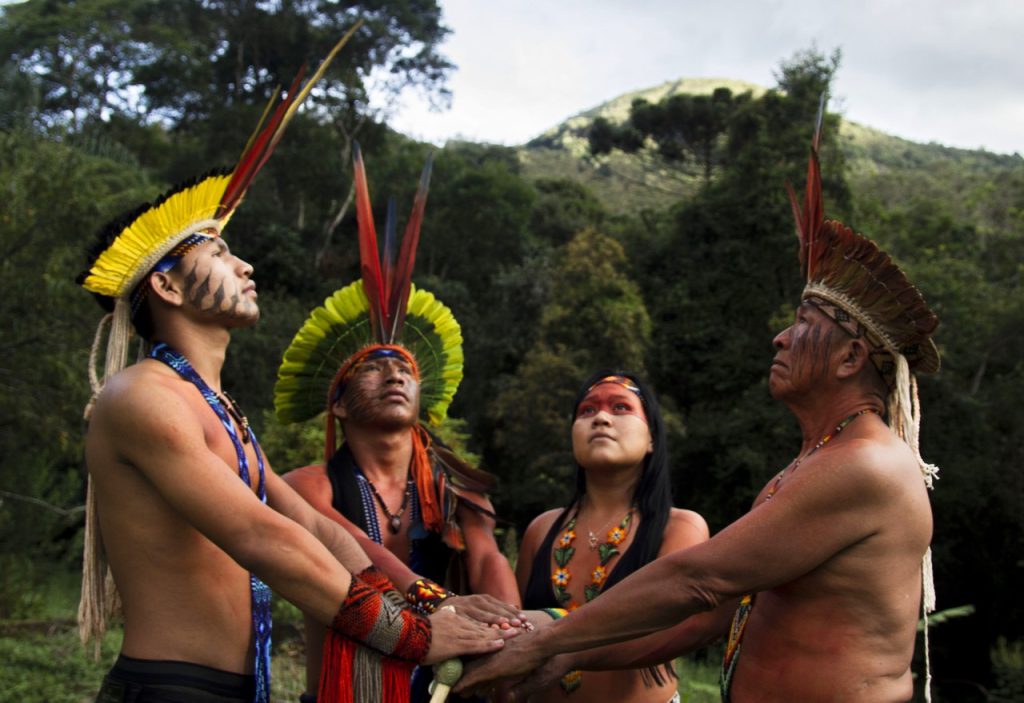
“When you take rapé, you connect with yourself, you observe yourself, you look at your thoughts,” the herbalist continues. “You start thinking good things for your family and for yourself.”
“There isn’t a specific time to use it, but it’s common to take it at 6 or 7 in the morning, and it’s very common to use it three times a day: in the morning, at midday, and in the afternoon. Those who are already very used to using it can do so whenever they feel like it.”
Paulo Gómez, who lived for a year in a Noke Kuin community: “Kambo is a medicine that is completely different from any Western medicine. When you go to the doctor, you need a quick solution, so they give you something to mask the problem.
But kambo is an opportunity to work on what’s bothering you because it’s not actually a cure. Kambo gives you the tools, the will, and the awareness so that you can recognize what’s making you sick and be able to confront it.”
“At least the Noke Kuin indigenous people treat the frog with great respect when extracting kambo. They run a stick along its back, and a white, milky substance comes out—that’s the kambo. After extracting the kambo, the frog is left in the same place where it was found, and then, obviously, they wait a while before extracting it again.
It’s so gentle that this frog is very docile; it’s not afraid of humans.”
According to the legends of the Katukina (Noke Koi) tribe, this frog is a very powerful being given to them by their deity more than 2,000 years ago. He taught them how to use it correctly and gave them the knowledge necessary to survive in a jungle environment that can sometimes be very hostile.
“According to the story they tell us, they were the first tribe to receive kambo, because kambo wasn’t discovered, but rather taught to them. And the one who taught it to them was their guide, their deity, whom they call Kokapin Shari.
The story is told of a very sick woman who couldn’t be cured with any medicine found in the jungle. Then this being taught them kambo and how to apply it, and with it, they were able to save the woman. The origin of this practice is not well known, but it is said to date back more than 2,000 years,” concludes Paulo Gómez.
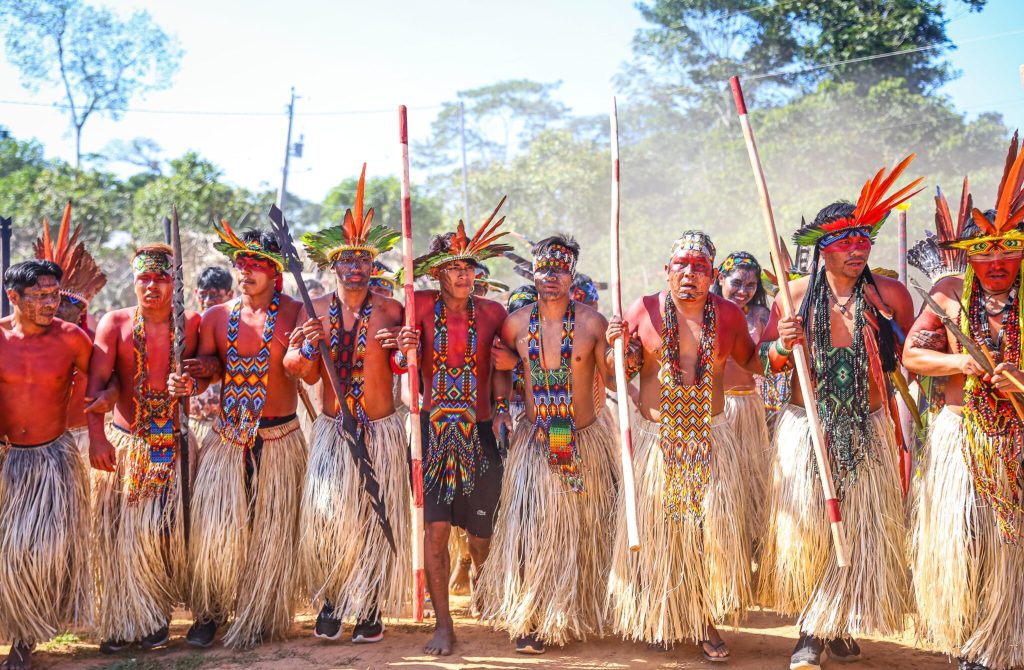
Katukina Territory
Like most Indigenous communities, the Noke Koi struggle against Amazonian deforestation, cultural eradication, and even their own physical extinction.
The Katukina—as well as other Indigenous groups in the upper Juruá region—were surrounded and subjugated when the rubber boom (Castilloa elastica) and the rubber tree (Hevea brasiliensis) boom began in 1880. The region was immediately invaded by Peruvians and Brazilians who arrived from different parts of the world to enrich themselves at the expense of the Amazon’s raw materials and the labor of the Indigenous people.
The Peruvians’ presence was fleeting, as they sought rubber in fallen trees and quickly depleted this resource. However, the Brazilian rubber tappers, who extracted the latex, settled in the area, exploiting trees by making a vertical cut in their bark, which allowed them to extract rubber for an indefinite period.
In these early years of contact, the Katukina moved frequently, trying to escape their exploiters, whose aim was sometimes to annihilate the indigenous populations in order to seize their territories. They dispersed throughout the region, spreading across the rainforest, living by gathering fruits and hunting.
The Katukina saw their territory and population drastically reduced. This population decline was also exacerbated by diseases brought by the white man, which they did not know how to cure with their traditional methods. Some submitted to the rubber tappers, proving more docile than members of other tribes, and many other families dispersed.
This created a rupture in their society, as they could no longer organize themselves according to their own traditions. In this back-and-forth movement between rivers and rubber plantations, the reference point to which the Katukina returned was the Gregório River, with its Seven Stars rubber plantation. The changes from one river or rubber plantation to another are part of the Katukina memory.
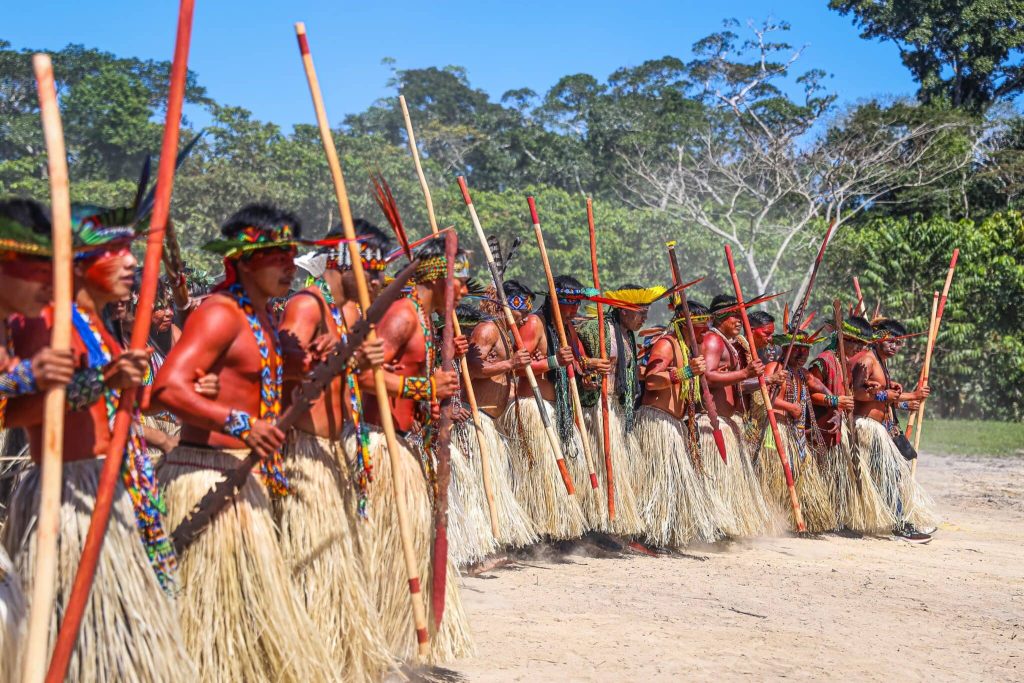
In the 1950s, most of the Noke Koi people were concentrated in the Siete Estrellas rubber plantation. Ten years later, a division arose within the Noke Koi community due to disagreements with their rubber plantation owner and with the Yawanawá, a tribe with whom they have always had a certain rivalry. Consequently, part of the group decided to seek another place to settle.
In the 1970s, two events occurred that decisively changed the contemporary location of the villages: the opening of the BR-364 highway (which connects Rio Branco with Cruzeiro do Sul) and the arrival of the New Tribes Mission of Brazil (MNTB) to work alongside the Katukina of the Gregório River.
With the construction of the BR-364 highway during Lula’s first term, some of the group that had settled near the mouth of the Riozinho da Liberdade were forced to relocate and even work in deforestation for the road’s construction. Others were also displaced from the Gregório River.
Upon completion of the highway, the Katukina were granted permission to settle along the roadside, which the central government considered a good location due to its proximity to the city of Cruzeiro do Sul.
There, they hoped to easily sell their handicrafts and obtain the manufactured goods they needed. Some saw the missionaries as a source of regular medical and educational assistance, and therefore did not resist the abandonment of their culture and traditions.
From the mid-1980s onward, after many years of wandering and relocating, the Katukina had their right to the territory they inhabited recognized and severed the ties that bound them to their employers who exploited the rubber plantations.
This was thanks to the uprising of other tribes, such as the Yawanawá, who resisted further enslavement by rubber tappers and subjugation by missionaries. They secured national rights over their territories and those of all the Indigenous peoples of the Amazon.
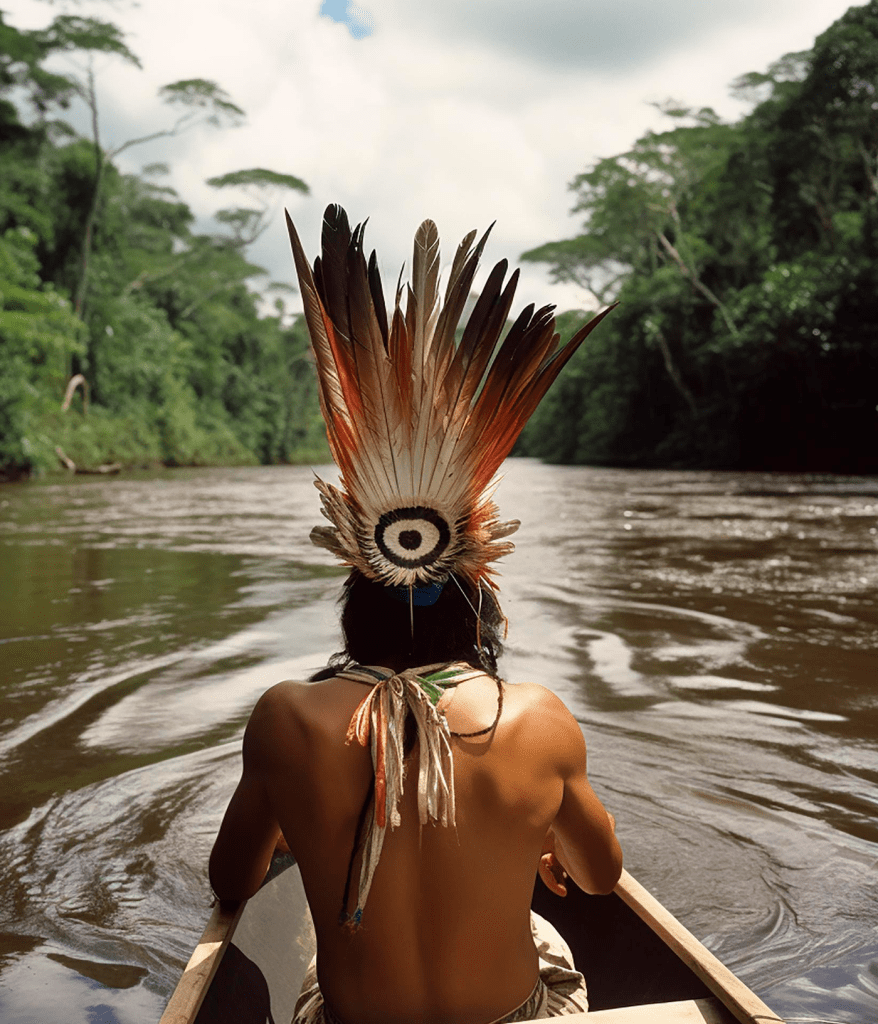
Throughout history, the Katukina have maintained contact (sometimes peaceful, sometimes not) with various Indigenous groups in the Juruá River region and, more recently, with groups in the Javarí River region. The Kulina, Yawanawá, and Marúbo are the three groups with whom contact was and continues to be most intense and significant for the Katukina.
Contact between the Katukina and the Kulina (speakers of an Arawa language who currently live in scattered villages along the Juruá and Purus rivers in Brazil and Peru) was frequent, at least until the 1960s. Members of both groups customarily met to perform rituals.
Today, the Katukina and Kulina no longer meet. Due to the successive migrations of the Kulina, the two groups now live far apart.
The Katukina still remember the chants taught to them by the Kolina, which were incorporated into the Katukina musical repertoire and which they still sing today, despite not understanding their meaning.
Of the Panoan linguistic groups in the upper Juruá region, the Yawanawá tribe are the closest and oldest neighbors of the Katukina, and they currently share the Gregório River Indigenous Territory with them.
The Yawanawá have always been the Noke Koi’s most frequent adversaries, accusing them of having abducted their women and triggering the war. Accusations of witchcraft are also common and persist to this day.
In the 1980s, the Noke Koi and the Yawanawá joined forces to demand the joint demarcation of their lands. Since then, their relations have improved, and they perform some rituals together, interethnic marriages occur, and co-residence exists.
Although somewhat more distant, the Marúbo have also maintained regular contact with the Katukina, which began not many years ago. They also share the names used to divide their clans: Varinawa (People of the Sun), Kamanawa (People of the Jaguar), Satanawa (People of the Otter), Waninawa (People of the Peach Palm), Nainawa (People of the Sky), and Numanawa (People of the Dove).
The first encounter between these two ethnic groups appears to have occurred around 1980, when missionaries brought two members of the Noke Koi tribe, inhabitants of the Gregório River, to meet the Marúbo.
In 1992, following a chance encounter at the port of Cruzeiro do Sul, the Katukina were walking along the port when they heard some people speaking a language similar to their own and decided to approach them. They discovered they had many characteristics in common, such as the names of their clans. They exchanged gifts and began visiting each other in their respective villages.
From these visits, the Katukina began to reflect on the similarities they shared with the Marúbo, concluding that in the past, the Marúbo and the Katukina must have formed a single group, having separated before their first contact with Europeans.
Their similarities keep both tribes allied: the Marúbo language is similar to the Katukina language; the communal houses in which the Marúbo live are very similar to the houses in which the Katukina lived before their contact with Europeans. According to the Katukina, the Marúbo maintain a way of life that must have been part of their customs and traditions in the past.


