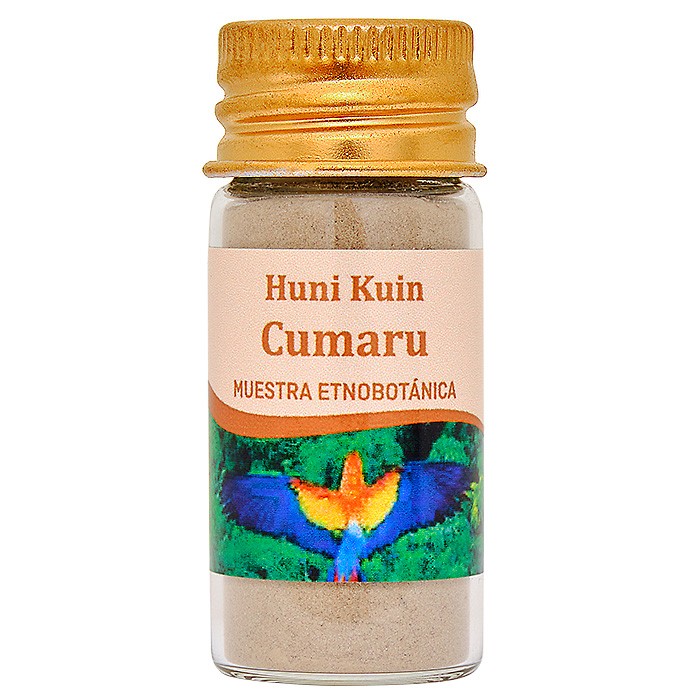
Rapé Cumaru
Within the Huni Kuin cosmovision, Cumaru belongs to the sphere of dau muka (bitter medicine), the knowledge of the mukaya (shaman): the one who works with the invisible forces of the forest, with the yuxin (spirits), with ayahuasca and with the ability to see beyond the surface. Where Murici accompanies the daily routine with lightness and joy, Cumaru sustains the ceremony, the vigil, the moment when attention needs to stop scattering and find its centre.
The spirit of Cumaru roots, concentrates and protects. It removes what is superfluous, compacts what scatters and sustains what needs grounding. It preserves the integrity of the one who receives it, like the tree itself that remains intact for centuries.
Cumaru is the rapé of the long fire, of the night vigil, of the work that demands steadfastness.
Composition:
- Amazonian mapacho (Nicotiana rustica)
The base of the rapé is Amazonian mapacho (Nicotiana rustica) roasted, ground and sieved to obtain an extremely fine powder. In Hãtxa Kuĩ, mapacho is called dume, and the resulting powder dume deshke (mapacho powder). It is the plant that gives structure, protects and lends strength to the whole.
- Cumaru ash (Dipteryx odorata)
Unlike other Huni Kuin ashes obtained from bark, the ash of Cumaru, called kumã in Hãtxa Kuĩ, is obtained from the wood, whose heartwood is extremely dense and rich in silica.
The Huni Kuin call the Cumaru tree “the one that does not rot” because it is “very true”, as its wood is one of the hardest in the tropics, resisting decomposition for centuries.
Burning the wood of the kumã to obtain its ash is an alchemy that requires time, patience and a long, sustained fire. What remains after the burning is a dark, mineral, exceptionally alkaline powder that awakens the strength of the mapacho with an intensity greater than that of lighter ashes. This concentrated alkalinity is what defines the character of kumã rapé: deep, steadfast, direct.
Among the ashes used by the Huni Kuin, that of kumã is the darkest and densest — a characteristic that reaffirms the position of kumã within the cosmovision of the people: dau muka, bitter medicine, the healing that reaches the depths.
Ceremonial use
Cumaru accompanies the moments of deepest spirituality within the Huni Kuin tradition. It is the medicine received before a ceremony of nixi pae (ayahuasca), in the moments when protection and grounding are necessary.
Its character orients it towards deep focus, energetic protection and grounding to the earth. The Huni Kuin recommend this variety for those who already know the path of rapé and seek a variety of greater depth.
Details
– Tribe: Huni Kuin (Kaxinawá)
– Region: Acre, Brazilian Amazon
– Composition: Dume deshke (Amazonian mapacho) and mapu de kumã (cumaru wood ash)
– Balance: Intermediate
– Character: Deep, grounding, protective
– Use: Amazonian ethnobotanical sample
Cumaru, the very true tree
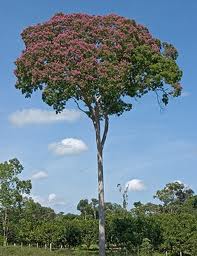
The kumã (Dipteryx odorata, family Fabaceae) is a tree that reaches between thirty and fifty metres in height, surpassing the forest canopy and receiving direct sunlight while the rest of the jungle remains in its shade. Its trunk can reach one metre in diameter, with smooth, grey bark.
Its flowers, pink to purple, open in clusters that attract the largest bees of the jungle: the Xylocopa (carpenter bees) and the Euglossa (orchid bees).
It bears a fleshy fruit, similar to a small mango, with a single seed inside: the tonka bean, black, wrinkled, three to five centimetres long, celebrated the world over for its aroma of vanilla and bitter almond.
These seeds are dispersed by bats and agoutis, understorey rodents that bury the beans as a food reserve and forget some, which germinate far from the mother tree. The tonka bean is used as an object of protection: it is carried on the person as an amulet to safeguard and “sweeten the path”.
As a legume, the kumã has the ability to associate with soil bacteria that fix atmospheric nitrogen, enriching the earth where it grows. It is a tree that gives more than it takes: it hardens its own wood until it becomes indestructible and at the same time nourishes the soil for the trees that grow in its shade.
The distribution of the kumã spans the whole of the Amazon: from Venezuela and the Guianas to Bolivia, through Brazil, Colombia and Peru.
What makes the kumã exceptional among the trees of the Amazon is the extreme hardness and durability of its wood, thanks to a heartwood full of silica particles that protect it from fungi, termites and wood-boring insects. Its grain is interlocked, with a waxy feel, and its colour ranges from reddish-brown to deep purple.
The Huni Kuin say of the kumã that it is “the tree that does not rot” because it is “very true”. The word kuin (true) is the same adjective with which the people name themselves (huni kuin, “the true people”).
In the late nineteen-nineties, a team of researchers measured the age of several trees in the central Amazon using radiocarbon. They found that Cumaru is one of the few Amazonian species capable of exceeding a thousand years of life, discovering a specimen of approximately fourteen hundred years of age.
One of the highest ages ever recorded in a tropical tree: a kumã living today in the jungle of Acre may have germinated when the classical empires on the other side of the world still existed.
The Huni Kuin say that the kumã possesses the wisdom of many enchantments, because the tree has accumulated in its wood, over the course of centuries, the knowledge of multiple protective forces of the forest: a kumã of fourteen hundred years has lived alongside entire generations, and its ash concentrates that wisdom.
In the Brazilian Amazon, the name “cumaru” applies to two trees of the same family (Fabaceae) but of different genera. The Cumaru Ferro or Cumaru Verdadeiro (Dipteryx odorata) is the giant of the canopy, the wood that does not rot, the tonka bean. Its name ferro (iron) alludes to the hardness of its wood. The Cumaru de Cheiro (Amburana cearensis), also known as imburana, is a different tree, with softer, aromatic wood and different properties. Huni Kuin Cumaru rapé is prepared with Cumaru Ferro: Dipteryx odorata, the very true tree.
The Amazonian Huni Kuin Tribe
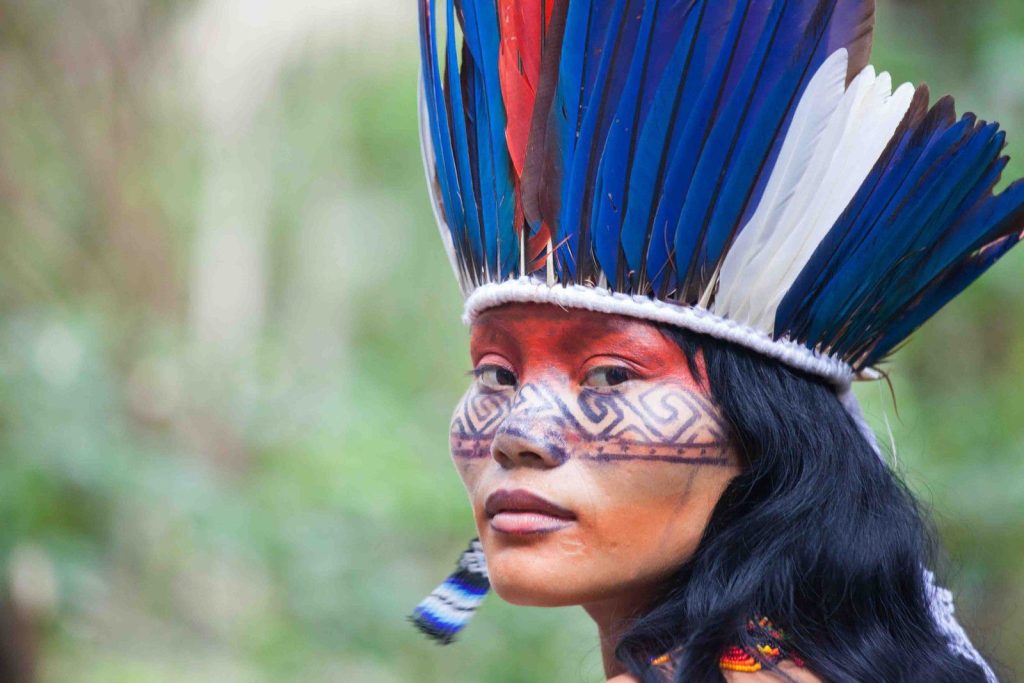
The Huni Kuin (“the true people” in Hãtxa Kuĩ, their language) are one of the most numerous indigenous peoples of the Brazilian Amazon. More than fifteen thousand people inhabit the basins of the Jordão River and the Upper Juruá, in the state of Acre, organised in over one hundred villages. Their recent history is a story of reconstruction: decimated during the rubber boom at the beginning of the twentieth century, they reclaimed their territory, recovered their language and rebuilt their communities in just three generations.